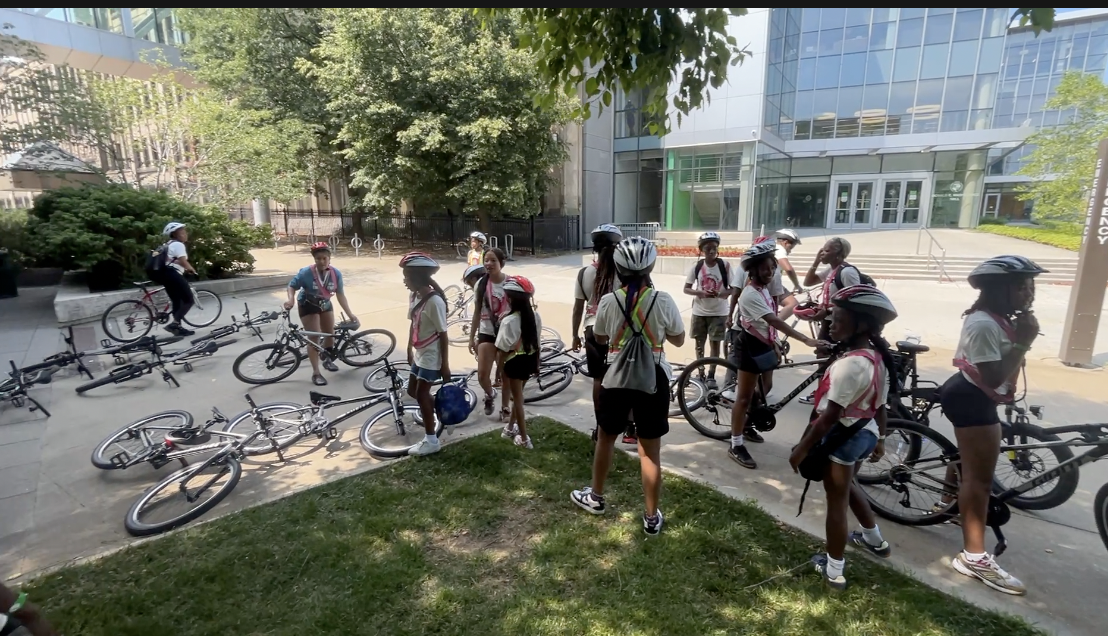
On a typical summer day in Cleveland, 100 students could easily be parked on the couch scrolling their phones. Instead, they're in a bike shop at Cleveland State University learning how to rebuild a bicycle from the frame up — and then taking those same bikes out onto city roads to practice riding safely alongside traffic.
The program is run by Bike Cleveland, the nonprofit working to make Cleveland a more bike-friendly city. Education director Diana Hildebrand says the camp is designed to show students that a bicycle isn't just a toy — it's a hands-on STEM machine. Gears, cables, brakes, and torque are all part of the curriculum.
within that four weeks, they learn about how the bicycle is an absolute form of STEM and STEM learning, and we do everything from fixing up a bicycle, basically from the frame on upDiana Hildebrand, education director at Bike Cleveland
The camp's structure is split between two worlds. Mornings are spent at Cleveland State University, where students get their hands dirty learning the mechanics of a bicycle — everything from cables and chains to brake systems and wheel alignment. It's applied physics and engineering dressed up as something they actually want to do.
Afternoons shift to the streets. Students strap on helmets and ride through Cleveland, practicing what Hildebrand calls 'riding properly on the roadways.' For many, it may be the first time they've navigated a real intersection on a bike with an adult guiding them through it.
How Well Do You Know Gear Up for STEM?
Four questions about the camp making Cleveland streets a classroom.
Where is the Gear Up for STEM bike camp headquartered this summer?
- Case Western Reserve University — Not quite — Case Western is a few miles east. The camp is based at Cleveland State University, right in the heart of the city, which puts students close to the roads they ride.
- Cleveland State University — Correct. Bike Cleveland runs the program out of Cleveland State University — and students use the surrounding city as their outdoor classroom every afternoon.
- Euclid Avenue Community Center — Not this time — though the group did ride past News 5's building on Euclid Avenue, which is how our reporter first spotted them. The camp itself is based at Cleveland State.
- Cuyahoga Community College — That's not the site — Gear Up for STEM is headquartered at Cleveland State University, not Tri-C. A News 5 reporter followed the group there after spotting them on Euclid Avenue.
How long does the Gear Up for STEM course run?
- One week — One week wouldn't be enough time to go from frame assembly to road-safe riding. The course runs four full weeks, giving students time to build real skills in both the shop and on city streets.
- Two weeks — Close in spirit, but the camp is actually four weeks long — enough time to learn bike repair from the frame up AND develop confidence riding on real Cleveland roadways.
- Four weeks — That's right. The four-week structure gives students time to master mechanical skills in the morning sessions and build real-world road confidence in the afternoon riding sessions.
- Eight weeks — The camp is four weeks, not eight. Bike Cleveland's Diana Hildebrand says within those four weeks, students go from frame assembly to riding safely on Cleveland's streets — a full arc in a short time.
What do students call their special Friday rides around Cleveland?
- Neighborhood Discovery Day — That's a reasonable guess for an exploration ride, but the camp's own name for it is 'Fun-Filled Friday' — a weekly tradition where students bike to different parts of the city.
- Fun-Filled Friday — Right. Every Friday, students explore a different part of Cleveland by bike. One recent outing included a visit to Public Square and a stop for ice cream — turning the city into the curriculum.
- STEM Saturday — It's actually Friday, not Saturday — and the name is 'Fun-Filled Friday.' Students use these rides to explore Cleveland neighborhoods on bikes, with Public Square on one recent itinerary.
- City Circuit — The real name is 'Fun-Filled Friday' — a weekly bike ride that takes students to different corners of Cleveland. One Friday stop included Public Square and an ice cream run.
How many students are participating in Gear Up for STEM this summer?
- About 40 — The program is larger than that — about 100 students are enrolled this summer, all going through the same four-week cycle of bike repair in the morning and road riding in the afternoon.
- About 100 — Correct. About 100 students are taking part in the summer session — a significant cohort learning everything from frame-up bike assembly to how to navigate Cleveland's streets safely.
- About 200 — The number is about 100 students, not 200. Bike Cleveland's Diana Hildebrand cited that figure when our reporter caught up with the group at Cleveland State University.
- About 25 — The group is actually about 100 students strong — large enough that a News 5 reporter spotted them riding in formation past the station on Euclid Avenue and decided to follow them.
This is an absolute way for them to just be outside, enjoying bicycling, enjoying being outside in the elements, and they're making great friends and connectionsDiana Hildebrand, education director at Bike Cleveland
For Bike Cleveland, the camp is about more than summer activity. It's a proof of concept — that a bicycle is one of the most effective STEM teaching tools a kid can get their hands on, and that Cleveland's streets are a classroom that doesn't require a building.
The Friday rides, which have taken students to Public Square and ice cream stops across the city, are also quietly doing something else: building a generation of young Clevelanders who feel ownership over their city and comfort moving through it on two wheels.
About Gear Up for STEM
- Headquartered at Cleveland State University: Students meet on campus for morning shop sessions and head out onto Cleveland streets in the afternoon.
- About 100 Students Enrolled This Summer: The four-week course covers hands-on bike repair and real-world road riding.
- Run by Bike Cleveland: Bike Cleveland is the nonprofit behind the program. Education director Diana Hildebrand leads the curriculum.