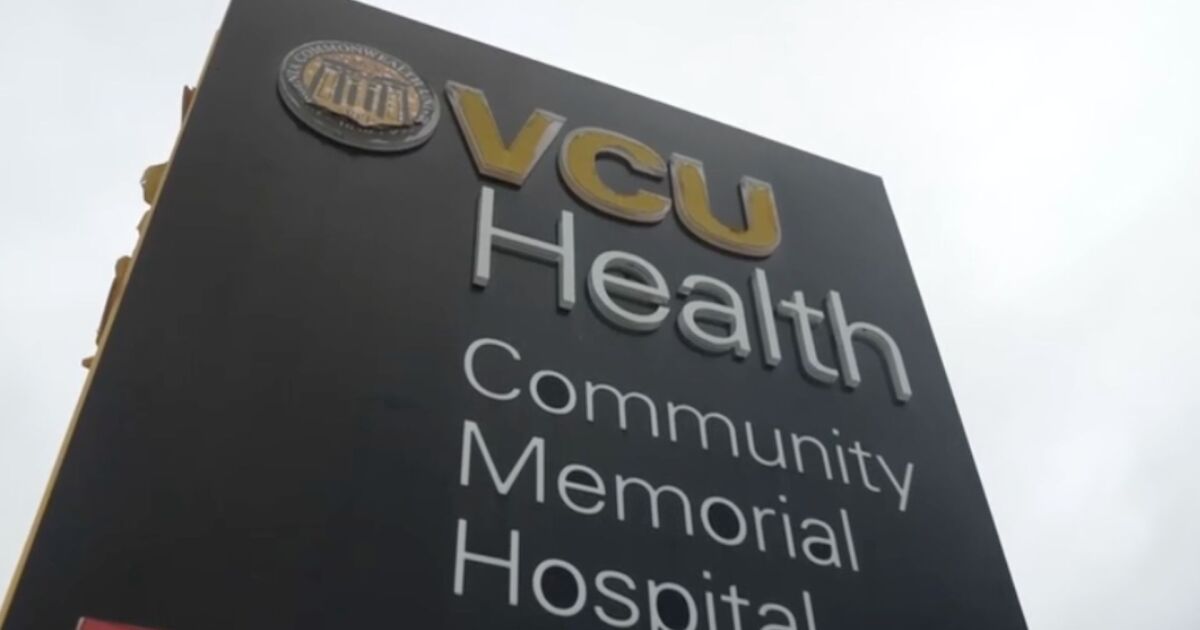
That distance you just measured isn't abstract. In rural southern Virginia, residents who live without rideshare service describe South Hill's VCU Health Community Memorial Hospital as their nearest lifeline — and they spent this summer fighting to make sure it stays that way.
When Virginia's Joint Commission on Health Care released a report in June flagging 13 rural hospitals as financially at risk, community organizer Cyliene Montgomery didn't wait. By late July, she had gathered her neighbors to confront the question directly: what happens to their health — and their lives — if the closest hospital closes?
We are a Uber desert, a Lyft desert... but when an emergency hits, South Hill is the closest thing to us, and it is a matter of life and deathPatricia Harper-Tunley, Lunenburg County, Virginia resident and local Democratic party leader
The transportation barrier Patricia Harper-Tunley described at July's community meeting captures something the numbers alone can't show. In communities without rideshare coverage, without frequent bus routes, without neighbors who can drive, the hospital isn't just a building — it's the entire safety net. When it disappears, there is nothing underneath.
That's why the distinction between types of rural hospitals matters so much. Some operate as standalone facilities, fully exposed to local financial pressures. Others, like South Hill's VCU Health Community Memorial Hospital, are part of larger academic health systems — drawing on shared resources, specialist expertise, and network support that standalone hospitals simply don't have access to.
How the Rural Hospital Crisis Unfolded
- 2015 — Rural hospital closures begin accelerating nationwide
- 2023 — 53 rural hospitals start eliminating inpatient services entirely
- June 2026 — Virginia Joint Commission on Health Care releases report flagging 13 rural hospitals at risk of closure
- July 2026 — Center for Healthcare Quality and Payment Reform analysis finds 700 rural hospitals at risk nationwide
- July 2026 — Community meeting held in rural Virginia; residents organize around South Hill hospital's future
- Coming months — South Hill campus expected to become a Level 3 trauma center as VCU Health expands services
Standalone Rural Hospital vs. System-Connected Rural Hospital
| Standalone Rural Hospital | System-Connected (like South Hill) | |
|---|---|---|
| Financial Assessment | Finances evaluated on campus alone | Evaluated as part of larger health system |
| Specialist Access | Limited to on-site staff | Draws on academic medical center faculty |
| Service Vulnerability | Higher risk of cutting services like cancer care or labor and delivery | VCU Health committed to expanding South Hill services |
| Trauma Capability | Often unable to achieve trauma designation | South Hill on track to become Level 3 trauma center |
| Closure Risk | Full financial exposure | Network support reduces standalone risk |
How Much Do You Know About the Rural Hospital Crisis?
Four questions. The answers may surprise you.
How many rural hospitals have closed across the United States since 2015?
- Around 30 — The real number is nearly four times higher. According to the Center for Healthcare Quality and Payment Reform, 110 rural hospitals have closed since 2015 — a pace that has accelerated sharply.
- Around 110 — Correct. The Center for Healthcare Quality and Payment Reform documented 110 rural hospital closures since 2015 — and that count doesn't include the 53 that have ended inpatient services entirely since 2023.
- Around 200 — Not quite — though the trajectory is alarming. The confirmed count is 110 closures since 2015, with 700 more currently at risk as of July 2026.
- Around 50 — The actual figure is more than double that. The Center for Healthcare Quality and Payment Reform found 110 rural hospitals have closed since 2015.
Since 2023, a specific category of rural hospitals has made drastic service reductions short of full closure. What have they done?
- Stopped accepting Medicare and Medicaid — That's not what the data shows. The documented trend since 2023 is rural hospitals eliminating inpatient services entirely — 53 facilities have taken this step, essentially turning full hospitals into outpatient-only clinics.
- Eliminated inpatient services entirely — Correct. Since 2023, 53 rural hospitals have ended inpatient services entirely — meaning patients requiring hospital stays must travel elsewhere, often long distances.
- Closed emergency rooms only — Emergency room closures are part of the broader picture, but the specific trend documented since 2023 is hospitals eliminating inpatient services entirely — 53 facilities have taken that step.
- Converted to nursing homes — That's not the documented pattern. Since 2023, 53 rural hospitals have ended inpatient services entirely, the data shows — a step that effectively transforms a full hospital into a much more limited facility.
Virginia's state health commission released a report in June 2026. How many rural hospitals in Virginia did it identify as at risk of closure?
- 3 — The number is significantly higher. Virginia's Joint Commission on Health Care identified 13 rural hospitals at risk — enough to set off community alarm and prompt organized responses across the state.
- 7 — Close in spirit but not in fact. The Virginia Joint Commission on Health Care identified 13 rural hospitals at risk — triggering community meetings and bringing South Hill's situation into sharp public focus.
- 13 — Correct. Virginia's Joint Commission on Health Care flagged 13 rural hospitals at risk in its June 2026 report, including VCU Health Community Memorial Hospital in South Hill — which community members rallied to defend.
- 25 — The official count from Virginia's Joint Commission on Health Care was 13 — enough to mobilize communities across the state, including the South Hill residents who organized in late July.
VCU Health's Dr. Marlon Levy contested the state report's characterization of South Hill's finances. What was his core argument for why South Hill should not be evaluated the same way as a standalone rural hospital?
- South Hill recently received a large federal grant — That's not the argument Dr. Levy made. His case was that South Hill benefits from being connected to VCU Health's academic medical center in Richmond — meaning it has access to specialist expertise and network support a standalone hospital never could.
- South Hill serves a larger population than the report assumed — Population size wasn't Levy's argument. He focused on the nature of the hospital's connection to VCU Health's academic medical center — arguing that rural hospitals linked to academic systems are in a fundamentally different category than standalone community hospitals.
- Its campus finances look unfavorable in isolation, but it benefits from being part of an academic health system — Correct. Dr. Levy acknowledged directly that standalone financial performance 'doesn't look particularly favorable' — but argued that South Hill draws on VCU Health's Richmond faculty and network, making it categorically different from a standalone rural hospital.
- The state commission used outdated financial data — Dr. Levy didn't dispute the data's timing. He disputed the framework — arguing that evaluating South Hill on campus-only finances misses the point entirely, since it operates as part of VCU Health's academic medical system.
That quiz captures exactly what Cyliene Montgomery and her neighbors were grappling with in late July. The systemic context — which hospitals are linked to academic centers, which are truly standalone, how the national closure wave unfolded — isn't abstract policy. It's the difference between a community that can fight back and one that gets left behind.
For South Hill, the answer so far has been reassuring. Dr. Levy was emphatic that VCU Health is not just maintaining the campus but actively expanding it. The expected Level 3 trauma designation in the coming months would give the community access to a higher tier of emergency care than it currently has. That's not the story for most of the 700 hospitals currently at risk across the country.
You can put it in bold, all caps, underline, however else you want to do it. Italicized. Highlight it. South Hill is not closing. It's not going to closeDr. Marlon Levy, Head of the VCU Health system
The Rural Hospital Crisis: By the Numbers
- 700 — At-Risk Hospitals Nationwide
- 110 — Closures Since 2015
- 53 — Ended Inpatient Care
- 13 — At Risk in Virginia
What's True — and What the Data Complicates
South Hill's VCU Health hospital is financially troubled and heading toward closure.
Verdict: mixed
Virginia's Joint Commission on Health Care did flag the South Hill campus as at risk based on its standalone financial profile. But Dr. Marlon Levy of VCU Health disputes that framing — arguing standalone campus finances don't reflect the support the hospital receives as part of an academic health system. He stated South Hill is not closing and that VCU Health is actively expanding services there, including a planned Level 3 trauma designation.
Rural hospital closures are a recent phenomenon driven by recent policy changes.
Verdict: false
The closure trend dates back to at least 2015, according to the Center for Healthcare Quality and Payment Reform. That's over a decade of closures, with 110 facilities shut down before the most recent wave of inpatient service eliminations that accelerated in 2023.
Rural residents who skip preventative care are making a choice.
Verdict: false
Community organizer Cyliene Montgomery made this point directly: without a nearby hospital, people don't skip care by choice — they skip it because the distance is a real barrier. When residents in Lunenburg County have no rideshare access and limited transportation, traveling for a primary care appointment isn't a lifestyle decision. It's a logistical impossibility for many.
A rural hospital connected to an academic medical center faces the same risk as a standalone facility.
Verdict: false
Dr. Levy was specific on this point: rural hospitals linked to academic medical centers are 'probably in a different category' than standalone community hospitals. The connection to VCU Health's Richmond faculty gives South Hill access to specialist expertise and network support that fully independent rural hospitals lack entirely.
Who Identified These Hospitals — and How?
Two separate entities tracked the crisis documented in this story. The Virginia General Assembly's Joint Commission on Health Care released its June 2026 report identifying 13 Virginia rural hospitals at risk — the report that triggered community alarm in South Hill and prompted Cyliene Montgomery to organize her neighbors.
The broader national picture comes from the Center for Healthcare Quality and Payment Reform, which published its analysis in July 2026 identifying 700 rural hospitals at risk nationwide and documenting 110 closures since 2015. The Center also documented the 53 hospitals that have ended inpatient services entirely since 2023 — a step short of full closure that still dramatically reduces community access to care.
It is worth noting the distinction Dr. Levy drew: financial analysis of a standalone campus may look unfavorable even for hospitals that are not genuinely at risk of closure, particularly when those hospitals are part of larger systems. The reports assess financial performance — they do not account for strategic commitments by parent health systems to maintain or expand a given campus.
What Rural Communities Can Do
- Know your hospital's status — Check whether your nearest rural hospital is flagged in your state's health commission reports or in analyses by the Center for Healthcare Quality and Payment Reform. Being informed is the first step to organizing.
- Show up and speak up — Cyliene Montgomery's July community meeting in rural Virginia demonstrates the power of organized community voice. Public comment periods, town halls, and hospital board meetings are real opportunities to make the community's stake visible.
- Understand your hospital's structure — Is your nearest rural hospital standalone, or is it part of a larger health system? System-connected hospitals like South Hill have different risk profiles and different advocates. Knowing the difference shapes how you engage.
- Contact your state legislators — State health commissions like Virginia's Joint Commission on Health Care can flag problems — but state legislatures make funding decisions. Constituent pressure on state lawmakers is one of the most direct levers communities have.
- Document transportation barriers — When communities push for hospital funding or policy relief, concrete data about transportation gaps — the 'Uber desert, Lyft desert' reality Patricia Harper-Tunley described — makes the case stronger. Local documentation matters.
Cyliene Montgomery knows South Hill's story ended better than most — for now. VCU Health's commitment to expand rather than cut services, and the expected Level 3 trauma designation, represent real wins for her community. But she is clear-eyed that the underlying crisis hasn't gone away.
Across the country, 700 rural hospitals are still at risk. The communities surrounding them don't all have the benefit of a major academic health system backing their local campus. For many, the question Montgomery and her neighbors forced into public view — whether rural Americans will be left out of the healthcare system entirely — remains unanswered. Her answer to that question is the same as it has always been: be proactive, organize, and refuse to accept that geography is destiny.
We have to be proactive in trying to make sure that we're good and our family members are good. Just because we're rural does not mean that we have to be left outCyliene Montgomery, Rural Virginia resident
Stay Informed on Rural Hospital Access
- Center for Healthcare Quality and Payment Reform: The Center's July 2026 analysis identified 700 at-risk rural hospitals and documented closures since 2015. Their state-by-state data is publicly available.
- Virginia Joint Commission on Health Care: The June 2026 report that identified 13 Virginia rural hospitals at risk is a public document from the Virginia General Assembly's oversight commission.
- Get Involved in Your Community: Community meetings like the one Cyliene Montgomery organized in rural Virginia are open to everyone. Contact your county board of supervisors or hospital board to find upcoming public sessions.
Sources & References
- Primary source: Scripps News — Stephanie Liebergen
- Center for Healthcare Quality and Payment Reform — Rural hospital at-risk analysis and closure data, July 2026
- Virginia General Assembly's Joint Commission on Health Care — Report identifying 13 Virginia rural hospitals at risk of closure, June 2026