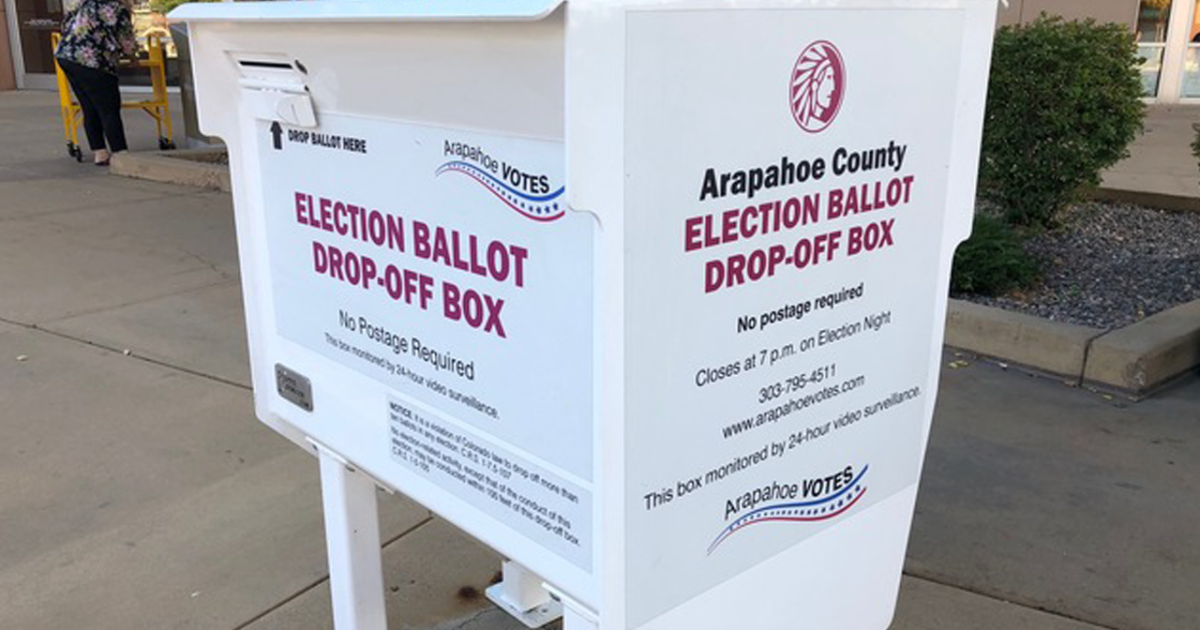
Your Access to Colorado's Ballot Process
How Well Do You Know Colorado's Ballot Process?
Four questions. See if you know how candidates actually get on your ballot.
What is a caucus in Colorado?
- A general election where all voters participate — Not quite. Caucuses are party-run meetings — not the general election — used to select who gets onto the primary ballot.
- A party meeting used to select candidates for the primary ballot — Correct. Caucuses are how both parties decide which candidates qualify for the primary — before most voters ever see a ballot.
- A statewide vote held in March — That's more like a primary election. Caucuses happen before that — and most voters don't even know about them.
- A debate between primary candidates — That's a debate! Caucuses are voting meetings held by party delegates, not public debates.
How many other U.S. states still use a convention-style system like Colorado's to place candidates on the primary ballot?
- About half — 25 states — Far fewer. Colorado is one of only three states still using this kind of convention-based system.
- Just 2 other states — Colorado is one of 3 total — That's right. The vast majority of states abandoned this approach over a century ago. Colorado is a significant outlier.
- Around 15 states — Not that many. Only 3 states — including Colorado — still rely on convention-like systems to put candidates on the primary ballot.
- Every state uses a similar process — Actually the opposite — most states moved away from this system more than 100 years ago.
Unaffiliated voters make up what share of Colorado's registered voters?
- About 20% — Much higher. Unaffiliated is actually the largest registration category in Colorado.
- About 35% — Close, but still higher. Over half of Colorado's registered voters are unaffiliated — and none can participate in caucuses.
- More than 52% — the largest group — Correct. Unaffiliated voters are the single largest group in Colorado — yet the caucus process excludes every one of them.
- About 45% — A little low. The actual figure is over 52%, making unaffiliated voters the biggest registration bloc in the state.
What is one reform Courageous Colorado is recommending?
- Require all caucuses to meet in one central location — That's not one of the proposals. The report focuses on broader access and transparency, not centralizing physical locations.
- Move to an open primary where every voter gets a ballot with all candidates — Exactly. An open primary is one of the key reforms proposed — it would give every registered voter, including the 52% who are unaffiliated, a say in who makes the ballot.
- Ban unaffiliated voters from registering — The opposite, actually. The report argues for including unaffiliated voters — not restricting them further.
- Give political parties more control over the process — The report recommends reducing party control over ballot access, not increasing it.
Colorado calls itself a purple state — competitive, independent-minded, a place where voter engagement matters. But the process for getting candidates onto the primary ballot tells a different story.
Amy Spicer, chief impact officer for the nonprofit Courageous Colorado and author of the new report, spent the 2026 election cycle observing 26 caucuses and assemblies across both parties. What she found: counties that don't post meeting notices online, parties relying on glitchy apps and unreliable paper systems, and delegates who are frankly exhausted from a process that can stretch across multiple weekends.
People just don't know when they're happening, why they should go, or the amount of time it's going to take them once they're there.Amy Spicer, Chief Impact Officer, Courageous Colorado
Colorado vs. The Rest of the Country
| Colorado | Most U.S. States | |
|---|---|---|
| System Type | Caucus / Convention | Direct Primary |
| Unaffiliated Voter Access | Excluded | Included in most |
| States Using This Model | 1 of 3 | 47 of 50 |
| When Most States Changed | Still waiting | 100+ years ago |
| Steps Before Voting | Up to 4 separate appearances | Show up once |
| Meeting Notices Posted Online | Not always required | Standard practice |
One Democratic state assembly delegate told Courageous Colorado the process requires showing up four separate times before you actually cast a primary ballot. That's four weekends, four sets of child care arrangements, four rounds of taking time off work — just to participate in a party process that most voters don't even know exists.
The report, titled 'Colorado's Closed Road to the Ballot: How Caucuses, Assemblies, and Petitions Shape the Colorado Democracy Paradox,' is calling on both the Republican and Democratic parties to explore alternatives — including simply eliminating the caucus and assembly process altogether.
What It Takes to Participate in Colorado's Caucus System
- Step 1 — Attend your local precinct caucus — if you can find out when and where it's happening
- Step 2 — Get selected as a delegate to your county assembly — requires party membership
- Step 3 — Attend county assembly and vote for candidates to advance
- Step 4 — Attend state assembly (if selected) before a single primary ballot is cast
- Primary — Registered party members finally vote — unaffiliated voters still excluded
The Problem By The Numbers
- 26 — Caucuses Observed
- 3 — States With This System
- 52% — Unaffiliated Voters
- 100+ — Years Most States Moved On
Common Claims About Colorado's Caucus System
The caucus system gives everyday voters a stronger voice.
Verdict: mostly false
In practice, caucuses filter candidate access through a small, party-affiliated delegate pool. The 52% of Colorado voters registered as unaffiliated have no voice at all. Even party members must navigate a multi-step, multi-weekend process that the report describes as 'incredibly confusing.'
Colorado is following a system most states use.
Verdict: false
Colorado is one of only three states in the country still using a convention-like system to place candidates on the primary ballot. The vast majority of states abandoned this approach more than 100 years ago.
Unaffiliated voters can participate if they register with a party.
Verdict: true
Technically, unaffiliated voters can affiliate with a party to participate. But the report argues this forces voters to choose a party affiliation just to participate in what many consider a public democratic process — a barrier that discourages engagement.
Both parties are open to reforming the system.
Verdict: unverified
Courageous Colorado is calling on both parties to explore reform, including reducing or eliminating the caucus and assembly process. Whether either party will act remains to be seen — no formal commitments have been made.
What Reform Could Look Like
Current System
- 3 States Use This Model A century behind most
- 52% Voters Excluded Unaffiliated Coloradans
- Up to 4 separate appearances required
- No universal requirement for online notices
- Dysfunctional apps and paper ballot issues reported
Open Primary (Proposed)
- 47 States Use Open Primaries The national standard
- 0% Voters Excluded Every voter gets a ballot
- Show up once — like a normal election
- Standard public notice and transparency
- Candidates compete for all voters, not just party delegates
Spicer and Courageous Colorado aren't necessarily demanding one specific fix — but they are insisting both parties take the problem seriously. Options on the table include reducing the role of caucuses, eliminating them entirely, or adopting an open primary model where every registered voter receives a ballot listing all candidates.
That last option would be a significant shift for Colorado — but advocates argue it would finally align the state's ballot access process with how most of the country already runs its primaries.
What Is an 'Open Primary' — And How Would It Work in Colorado?
An open primary is a system where every registered voter — regardless of party affiliation — receives a ballot during the primary election that includes all candidates from all parties. Voters pick the candidate they prefer, and the top vote-getters advance to the general election.
Currently, Colorado's primary allows unaffiliated voters to participate in the party primaries for the general election — but the caucus and assembly process that determines who even gets onto that primary ballot is closed to them. Reform would target that earlier, less visible step.
Several states use a 'top-two' open primary, where the two candidates with the most votes advance regardless of party. Alaska recently adopted a 'top-four' system with ranked-choice voting. Courageous Colorado hasn't prescribed a specific model, but is calling on both parties to evaluate alternatives before the next election cycle.
What You Can Do About It
- Check Your Registration Status — Visit coloradosos.gov to see how you're currently registered and whether you'd be eligible to participate in a caucus or assembly.
- Contact Your Party's County Chair — If you're a registered Democrat or Republican and want to participate, reach out to your county party to find out when caucus meetings are scheduled — they're not always easy to find.
- Read the Full Courageous Colorado Report — The full report — 'Colorado's Closed Road to the Ballot' — is available at courageoouscolorado.org. It details findings from all 26 caucuses and assemblies observed.
- Contact Your State Legislators — Primary ballot access is ultimately a policy question. Tell your state representative or senator where you stand on reforming the caucus system.
Take Action on Colorado's Ballot Process
- Read the Full Report: "Colorado's Closed Road to the Ballot" — the full Courageous Colorado findings from 26 caucuses and assemblies.
- Check Your Voter Registration: Confirm your registration status and party affiliation at the Colorado Secretary of State's website.
- Contact Colorado Legislators: Let your state representatives know how you feel about open primaries and ballot access reform.