Your Community's Stake
State Rep. Jamie Callender (R-Concord) helped steer a portion of the $208 million community project fund toward Northeast Ohio. His pitch: bring families from within a 200-to-300-mile radius to the lakefront for a weekend — or even just a day — and give them something worth the drive.
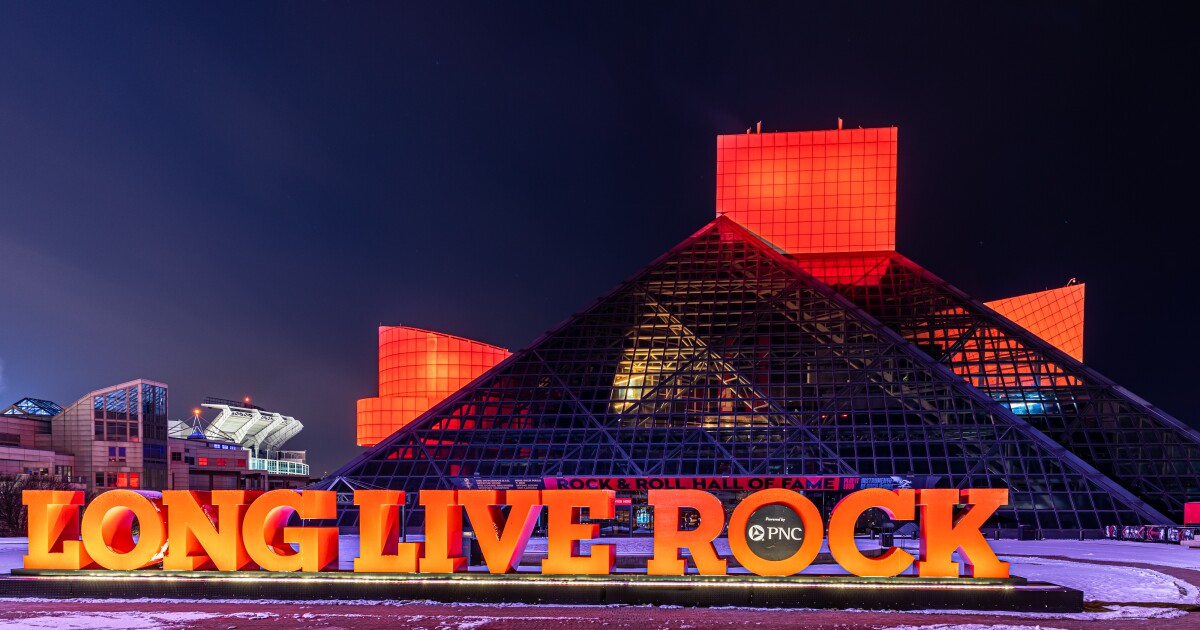
That vision lines up neatly with the cultural investments heading to Cleveland. The Rock Hall, the Cleveland Museum of Art, and the Cleveland Orchestra all made the list, signaling that state lawmakers see the arts district as an economic anchor worth protecting.
Losing the Browns is kind of a hurdle we're gonna have to get over.Rep. Jamie Callender (R-Concord), on Northeast Ohio's capital budget priorities
Northeast Ohio vs. The Rest of the State
| Northeast Ohio | Hamilton County (Cincinnati) | Statewide Total | |
|---|---|---|---|
| Largest single award | $10M (East Cleveland) | $2.5M (Farmer Music Center) | $10M+ |
| Arts & culture funding | $5.5M+ | $3M+ | $208M (community share) |
| Parks & recreation | $1.5M | — | Multiple awards |
| Social services | $200K | — | Multiple awards |
| Source of funding push | Rep. Callender + Sen. Cirino | Urban county members | Bipartisan support |
Not every dollar in this budget goes to marquee institutions. In Akron, the Hope and Healing Survivor Resource Center — formerly known as the Battered Women's Shelter and Rape Crisis Center — is in line for $200,000 to replace its aging HVAC system. Without it, the shelter says it may not be able to run its kitchen during summer months.
The center serves roughly 5,000 people a year across Summit and Medina Counties, providing free services to survivors of domestic violence. Kate Robbins, who leads the organization, says the renovations are about more than comfort — they're about keeping the doors open.
If we don't get the HVAC addressed, in the summer months when temperatures start to rise, we may not be able to function.Kate Robbins, Hope and Healing Survivor Resource Center, Akron
Where the Money Is Going: Key Northeast Ohio Projects
- Arts — Rock & Roll Hall of Fame — $2 million for expansion
- Arts — Cleveland Museum of Art — $2 million for capital improvements
- Arts — Cleveland Orchestra — $1.5 million for facility support
- Parks — Cleveland Metroparks — $750,000 for new sailing center
- Parks — Cleveland Zoo — $750,000 for infrastructure
- Services — Hope & Healing Center (Akron) — $200,000 for HVAC and building renovations
- Infrastructure — East Cleveland — $10 million for roads and buildings
Perhaps the most striking single investment in the Northeast Ohio package is the $10 million earmarked for East Cleveland. Senate Finance Chair Jerry Cirino (R-Kirtland) championed the award, calling it a 'bolus of money' — a medical term for a concentrated dose — aimed at jump-starting a city that has been in financial distress for years.
East Cleveland has struggled with deteriorating roads, aging public buildings, and a shrinking tax base for decades. Cirino's argument is blunt: without serious outside investment, the city cannot reverse course on its own.
East Cleveland: The Stakes of This Investment
Without Funding
- Distressed City Financial Status Ongoing fiscal emergency
- Deteriorating road network
- Aging public buildings
- Limited ability to attract investment
With $10M State Investment
- $10M Infrastructure Injection State capital budget award
- Road repair and reconstruction
- Critical building upgrades
- Platform for longer-term revitalization
Do You Know Where Your Tax Dollars Go?
Test your knowledge on Ohio's capital budget — 4 quick questions.
What is Ohio's total capital budget for this cycle?
- $400 million — Close — but the actual figure is 10 times larger. Ohio's capital budget funds major infrastructure, arts, and community projects statewide.
- $4 billion — Correct! The $4 billion capital budget is one of the largest in recent Ohio history, covering hundreds of community projects.
- $40 million — That's much lower than the actual figure. The capital budget is $4 billion — spread across communities statewide.
- $1.2 billion — Not quite. Ohio's capital budget this cycle is $4 billion, funding everything from arts halls to road repairs.
Which Northeast Ohio institution is getting the LARGEST arts funding award in this budget?
- Cleveland Orchestra — The Orchestra gets $1.5 million — generous, but not the top award. The Rock Hall and Cleveland Museum of Art each get $2 million.
- Rock & Roll Hall of Fame — Right — the Rock Hall is tied with the Cleveland Museum of Art at $2 million each, the largest arts awards in Northeast Ohio.
- Cleveland Museum of Art — Correct! The Cleveland Museum of Art is tied with the Rock Hall at $2 million — the largest arts awards for the region.
- Cleveland Metroparks — Metroparks gets $750,000 for a new sailing center — significant, but the top arts awards go to the Rock Hall and Cleveland Museum of Art.
Why does the Hope and Healing Survivor Resource Center in Akron urgently need capital funding?
- To build a new facility — The center isn't building new — it needs to renovate its existing building, starting with a critically outdated HVAC system.
- To replace a failing HVAC system that could shut down their kitchen — Exactly. Without a functioning HVAC system, the shelter says it may not be able to operate its kitchen in summer heat — threatening services for 5,000 people a year.
- To hire more staff — The $200,000 award is for building renovations, not staffing — specifically to replace the HVAC system that keeps their kitchen running year-round.
- To expand into a second location — The funding is for their existing building. The HVAC system is a critical infrastructure need that affects their ability to serve survivors daily.
State Sen. Cirino said East Cleveland needs this funding because...
- It's the fastest-growing city in Ohio — Actually the opposite — East Cleveland has been in long-term decline, with a shrinking tax base and deteriorating infrastructure.
- Without infrastructure investment, it has little chance of turning around — Correct. Cirino's argument was direct: without a significant outside injection of capital, East Cleveland can't reverse decades of fiscal decline on its own.
- It recently lost its major employer — While East Cleveland faces many challenges, Cirino's case for the $10 million focused on infrastructure and the need for outside investment to stabilize the city.
- It was damaged in a recent natural disaster — East Cleveland's needs are structural and long-term — decades of disinvestment, not a recent disaster. That's why Cirino pushed for the $10 million infrastructure award.
Separating the Spin from the Facts
This funding is partly meant to replace what the Browns' departure will cost Cleveland.
Verdict: mostly true
Rep. Callender acknowledged the connection when asked directly — saying 'losing the Browns is kind of a hurdle we're gonna have to get over.' The arts and lakefront investments are clearly aimed at keeping Cleveland a destination city, even if the budget predates the stadium decision.
The capital budget funds ongoing operations at places like the Rock Hall and Zoo.
Verdict: false
Capital budgets fund one-time construction, renovation, and infrastructure projects — not salaries or day-to-day costs. The Rock Hall's $2 million is for expansion work, not programming.
Only big cultural institutions in major cities got funding — smaller communities were left out.
Verdict: false
The budget includes awards to domestic violence shelters, local theaters, and infrastructure in struggling cities like East Cleveland. House Finance Vice Chair Dovilla noted that urban county members across the state shaped where money went.
East Cleveland's $10 million is the largest single award in Northeast Ohio.
Verdict: true
Based on the projects reported so far, East Cleveland's $10 million infrastructure award is the largest single allocation in the region — dwarfing even the Rock Hall and Museum of Art awards at $2 million each.
How Northeast Ohio's Awards Stack Up (Share of $208M Community Fund)
How Does Ohio's Capital Budget Actually Work?
Ohio's capital budget is passed by the General Assembly every two years. Unlike the operating budget — which funds state agencies, schools, and Medicaid — the capital budget pays for physical infrastructure: buildings, renovations, equipment, and construction projects.
Lawmakers from both parties advocate for projects in their districts, and the final bill reflects months of negotiation. Community organizations, nonprofits, arts institutions, and local governments all lobby for inclusion. The $4 billion figure includes both state bonds and federal pass-through dollars.
Once the budget passes, individual organizations must apply for and meet the conditions of their grants before money is released. Awards announced in the capital budget are commitments — but projects still need to comply with state oversight requirements before they actually receive checks.
What Happens Next
- Budget Must Pass the Full Legislature: These awards aren't final until the Ohio General Assembly passes the capital budget and the governor signs it. Follow News 5 for updates as the vote approaches.
- More Projects Still Being Announced: Hundreds of additional community awards are still being detailed. News 5 will continue breaking down what's in the budget for Northeast Ohio in the coming weeks.
- Contact Your State Lawmakers: Want to weigh in on how capital dollars are spent in your community? Find your state representative and senator at the Ohio General Assembly website.
- Support Hope & Healing in Akron: The Hope and Healing Survivor Resource Center serves 5,000 people a year across Summit and Medina Counties — all services free of charge.
Sources & References
- Primary source: local-news — Morgan Trau
- Ohio General Assembly — Ohio capital budget process, project awards, and legislative timeline
- Ohio Office of Budget and Management — Capital appropriations structure, bond financing, and grant conditions
- Hope and Healing Survivor Resource Center — Service capacity (5,000 people/year), HVAC renovation needs, and service area (Summit and Medina Counties)
- News 5 Cleveland / WEWS — Original statehouse reporting by Morgan Trau on Northeast Ohio capital budget awards