Your Transition Risk Level
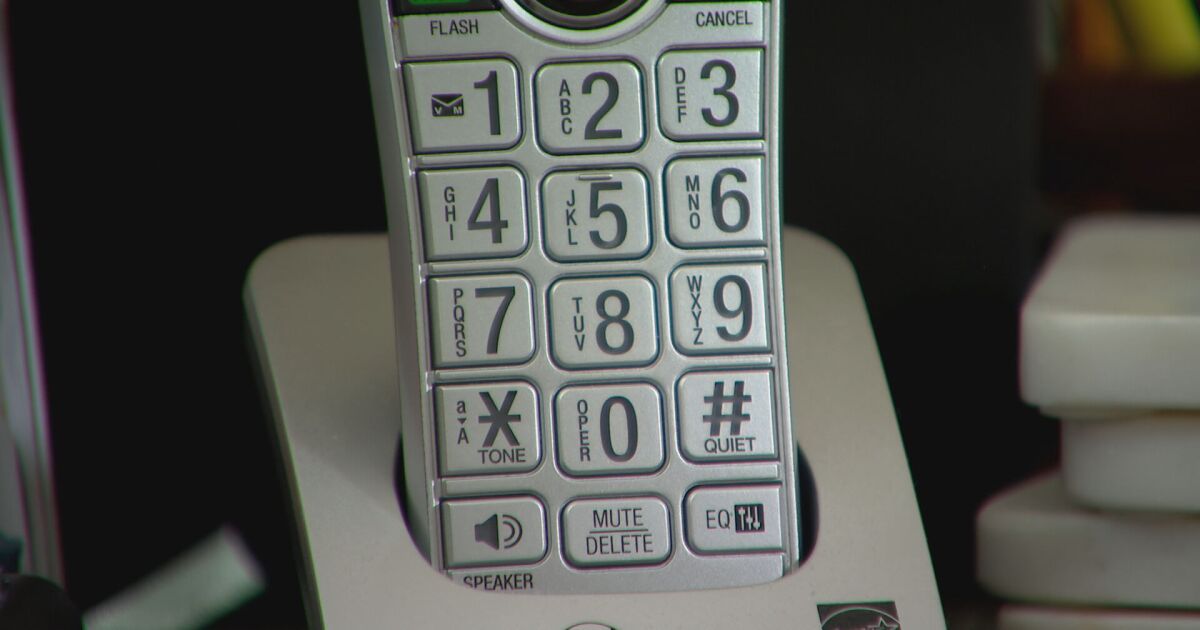
Ann Bridges, a Tennessee AT&T customer, had her home phone line for more than four decades. When it was damaged recently, she expected a repair crew. Instead, she got a notice: the line was too old and too costly to fix — she'd be upgraded to newer technology whether she was ready or not.
Her frustration wasn't really about the technology itself. It was about the process — being informed after the fact rather than ahead of time, and suddenly having to update contact information across banks, credit cards, and services she'd connected to that number over a lifetime.
I feel like I've got to go back through all my credit card people and update all that information.Ann Bridges, AT&T landline customer of 40+ years, Tennessee
Copper Landline vs. Replacement Technology
| Copper Landline | New Replacement Tech | |
|---|---|---|
| Monthly Cost (pre-tax) | ~$72 | ~$45 |
| Robocall Filtering | Limited | Built-in filtering |
| Speed & Reliability | Legacy infrastructure | Faster, newer network |
| Rural Coverage | Established | Gaps possible |
| Works in Power Outage | Yes (copper) | May require backup power |
| 911 Support | Standard | Must verify with provider |
| AT&T Phase-Out Timeline | Sunset by 2029 | Ongoing rollout |
Proponents of the switch argue the new network is a genuine upgrade — more reliable connections, faster speeds, and better tools to block the robocalls that plague older phone systems. AT&T says it's contacting affected customers multiple times over a year-long window, through letters, email, text, and phone calls.
But advocacy groups like AARP aren't so sure the process is working as smoothly as planned. Bridges reportedly received her notice only after she reported an outage in early May — not proactively before a problem occurred.
Are You Ready for the Landline Transition?
Five quick questions. Find out if you're prepared — or caught off guard.
Do you know whether your landline runs on copper or fiber/internet-based technology?
- Yes, I know exactly what I have — Great. Copper lines are the ones being phased out — if that's yours, start planning now.
- I think it's copper but I'm not sure — Call your provider and ask directly. Say: 'Is my line copper-based and subject to the AT&T phase-out?'
- No idea — Start here: check your bill for the service type, or call your carrier's customer service line.
If your landline disappeared tomorrow, do you have a reliable backup communication method?
- Yes — cell phone with strong home signal — You're in good shape. Make sure your emergency contacts have your cell number.
- Yes — cell phone, but signal is spotty at home — Consider a signal booster or ask your carrier about coverage improvements in your area.
- No reliable backup — This is urgent — especially for medical emergencies. Contact your carrier about bridge options and reach out to AARP's OATS program for tech training support.
Have you updated key accounts (bank, doctors, emergency contacts) with a non-landline number?
- Yes, everything is current — Smart. This is one of the most overlooked steps in any phone transition.
- Some, but not all — Start with the highest-stakes ones first: your doctor, bank, and 911-linked records.
- Haven't thought about it — Make a list right now. Medical alert systems, bank two-factor authentication, and pharmacy notifications often ring landlines first.
Do you live in a rural area or somewhere cell service is unreliable?
- Urban or suburban — cell service is fine — Transition is likely smoother for you. Focus on updating contacts and understanding the new service.
- Rural — but I have decent cell coverage — Watch this transition closely. Rural coverage gaps are AARP's top concern with the copper sunset.
- Rural with poor or no cell service — Contact AT&T immediately to ask what options they're providing for customers without viable cell alternatives. You have consumer rights here.
Have you received any notice from AT&T or your phone provider about a technology transition?
- Yes — I got a letter, email, or call — Don't ignore it. AT&T says customers get a full year of outreach — this is likely the beginning of that process for you.
- Not yet, but I'm in an affected state — You may be in an earlier phase. Start the conversation with your provider now rather than waiting for a problem to force the issue.
- No — and I'm not sure if I'm affected — Check AT&T's website or call 800-288-2020. Ask whether your specific address is on a copper line scheduled for transition.
AARP has been monitoring the transition closely — particularly on behalf of older Americans and rural residents who may have no practical alternative to a landline. For many in these groups, this isn't a simple technology upgrade. It's a disruption to decades of routine.
AARP State Director Mia McNeil put it plainly: when you've done something for a significant part of your life, it becomes your comfort zone. She's calling on phone companies to provide adequate training, clear timelines, and — critically — affordability assurances.
As a consumer, you have the right to ask: am I going to be able to keep my phone number? Is it going to support 911 the way my landline does right now?Mia McNeil, AARP State Director
Which 18 States Are Affected?
The FCC has granted AT&T permission to wind down copper infrastructure in the following 18 states by the end of 2029: Alabama, Arkansas, Florida, Georgia, Indiana, Kansas, Kentucky, Louisiana, Michigan, Missouri, Mississippi, North Carolina, Ohio, Oklahoma, South Carolina, Tennessee, Texas, and Wisconsin.
If you're an AT&T customer in any of these states with a traditional copper-based landline, you are directly in scope for this transition. AT&T says it will send notices to all affected customers, but as the Tennessee case shows, customers may not receive proactive outreach until there's already a problem with their line.
Customers in other states may not be immediately affected, but industry observers note that this type of FCC-approved phase-out could set a precedent for other carriers and regions in coming years.
How AT&T Plans to Notify Customers (Year-Long Process)
Life With vs. Without a Copper Landline
Current Copper Service
- ~$72/mo Monthly Cost Before taxes and fees
- Works during power outages
- Established 911 integration
- No cell signal needed
- Familiar technology
After the Transition
- ~$45/mo Monthly Cost Before taxes and fees
- May need battery backup
- 911 support — verify with carrier
- Relies on internet or cell infrastructure
- Better robocall filtering
One often-overlooked concern: copper landlines work during power outages because the electrical current runs through the phone line itself. Many replacement technologies — including fiber-based and internet-phone services — require a powered router or modem, which goes dark when the power does. For households in tornado alley, hurricane zones, or areas with frequent outages, this is a real safety gap.
AT&T has not announced specific programs to provide battery backup equipment to all transitioning customers, though the FCC requires carriers to address this issue in their phase-out filings.
What Landline Users Should Do Right Now
- Find Out If You're on Copper — Call your phone provider and ask specifically: 'Is my line copper-based and scheduled for transition?' Don't assume based on your bill description.
- Ask Your Key Questions — Per AARP: Ask about keeping your number, 911 compatibility, costs after transition, and what training or support is available.
- Update Your Contact Records — Make a list of every account, alert system, or service tied to your landline number — bank, doctor, pharmacy, medical alert, two-factor authentication — and update them before you need to.
- Plan for Power Outages — If you rely on your phone during emergencies, ask your provider about battery backup options for new equipment. Don't assume the new technology is outage-proof.
- Explore Tech Training if Needed — AARP's OATS (Older Adults Technology Services) program offers free training on smartphones and new tech. Visit oats.org or contact your local AARP chapter.
Resources for Landline Users
- Contact AT&T About Your Line: Call AT&T customer service to ask whether your line is copper and when your transition is scheduled.
- AARP Helpline: AARP can connect you with resources and advocate on your behalf for a fair, well-communicated transition.
- Free Tech Training — OATS Program: AARP's Older Adults Technology Services offers free training on smartphones and navigating new communication technology.
- File an FCC Complaint: If you believe AT&T failed to properly notify you or is not honoring its transition obligations, you can file a complaint with the FCC.
What You've Heard — What's Actually True
AT&T is giving customers no warning before switching them.
Verdict: mostly false
AT&T says it provides a year-long outreach process including letters, email, texts, and phone calls. However, some customers — like Ann Bridges in Tennessee — report receiving notice only after reporting an outage, not proactively beforehand.
The new technology costs more than copper.
Verdict: false
According to FCC records, copper landlines run approximately $72 per month before taxes and fees. The replacement option is $45 per month — a $27 savings. Taxes and fees may vary.
You can keep your phone number after the transition.
Verdict: true
Number portability is a consumer right. You should be able to keep your existing number. AARP recommends explicitly confirming this with your carrier before the transition is complete.
911 services won't work on the new technology.
Verdict: false
The FCC requires carriers to maintain 911 functionality in replacement services. However, AARP recommends verifying 911 compatibility with your specific new service before your copper line is shut off.
Only AT&T customers are affected by landline phase-outs.
Verdict: mostly false
AT&T's copper sunset is the largest and most visible right now — covering 18 states by 2029 with FCC approval. But the broader trend of moving away from copper is industry-wide. Other carriers may pursue similar phase-outs in the years ahead.
Sources & References
- Primary source: science-and-tech — Scripps News Group
- Federal Communications Commission (FCC) — AT&T copper network phase-out authorization across 18 states; monthly cost figures for copper vs. replacement services
- AARP — Consumer guidance on landline transition rights, rural concerns, and recommendations for phone companies' notification obligations
- AT&T Corporate Blog — AT&T's stated customer notification process: letters, email, SMS, and phone calls over a year-long transition window
- OATS — Older Adults Technology Services — Free technology training programs for seniors navigating smartphone and new communication technology transitions