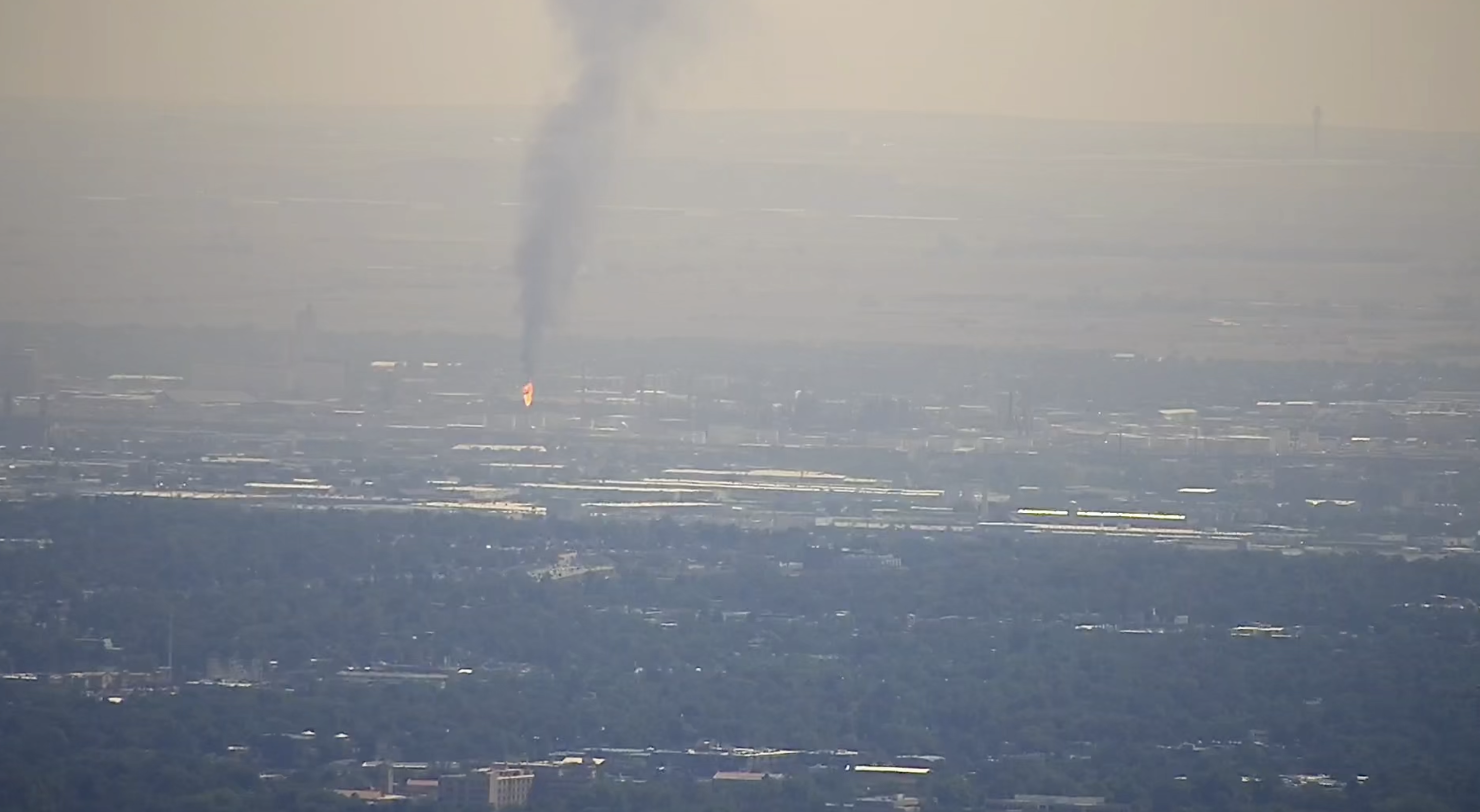
If you live near Commerce City, this story is about the air you breathe every day — not just one dramatic morning. The Suncor refinery sits in one of the most industrially concentrated corridors along the Front Range, and its emissions touch the daily lives of tens of thousands of Denver-area residents.
Tuesday's flare was described by Suncor as part of 'unit startup activities' — a process the company says is built into how refineries safely manage excess gas. But neighbors who contacted Denver7 said they received no advance notice, and that the smoke visible for miles felt like anything but routine.
Your Connection to This Story
That frustration neighbors have carried for years now has a formal outlet. Colorado's CDPHE Air Pollution Control Division published the Colorado Refinery Report on May 1, 2026 — comparing Suncor's data, requirements, and procedures to petroleum refineries nationwide. The report found potential opportunities to reduce emissions at the facility.
The division is now developing a formal proposal based on those findings. Before it goes to the Air Quality Control Commission, the state is holding a series of public Zoom meetings this summer so community members can weigh in. If the commission approves a rulemaking request, a formal hearing could happen in spring 2027.
The Long Road to Accountability
- 2023 — EPA report released — A U.S. Environmental Protection Agency report showed Suncor produced more air pollution than 11 comparable refineries across the United States.
- 2024 — Clean Air Act lawsuit filed — Community members and environmental groups filed a lawsuit against Suncor alleging repeated violations of the Clean Air Act.
- May 1, 2026 — Colorado Refinery Report published — CDPHE Air Pollution Control Division releases a comparative report identifying potential opportunities to reduce emissions at Suncor.
- July 29, 2026 — Large flare visible from Commerce City — Black smoke and flames spotted from a Denver7 city camera. Suncor says it is part of 'unit startup activities' and an 'important safety measure.' Residents say they received no advance warning.
- Aug. 26, 2026 — First CDPHE public meeting (Zoom) — 1–3 p.m. on Zoom. Community members can provide feedback on the division's emission-reduction proposals.
- Aug. 29, 2026 — Second CDPHE public meeting (Zoom) — 10 a.m.–12 p.m. on Zoom.
- Sept. 1, 2026 — Third CDPHE public meeting (Zoom) — 6–8 p.m. on Zoom.
- End of 2026 — CDPHE presents proposal to Air Quality Control Commission — The division plans to request a rulemaking hearing. If approved, the hearing would take place in spring 2027.
How Well Do You Know the Suncor Story?
Four questions. The answers might surprise you.
Suncor is the only petroleum refinery in Colorado. What does it produce?
- Only gasoline and diesel — Suncor's output is broader than most people realize. According to the CDPHE, it manufactures gasoline, jet fuel, diesel fuels, AND asphalt — touching nearly every type of transportation and road construction in Colorado.
- Gasoline, jet fuel, diesel, and asphalt — Correct. Suncor is the only facility making all four of these products in Colorado — meaning there is no in-state alternative if the refinery goes offline or faces significant regulatory action.
- Natural gas and propane — Natural gas and propane come from different types of facilities. Suncor is a petroleum refinery — it processes crude oil into gasoline, jet fuel, diesel, and asphalt, per the CDPHE.
- Jet fuel only — it serves DIA — DIA is certainly a major customer, but Suncor's role goes far beyond aviation. The facility also produces the gasoline in your car and the asphalt under every Denver street.
A 2023 EPA report found that Suncor produced more air pollution than how many comparable U.S. refineries?
- 3 similar refineries — The actual number is much larger. The EPA report found Suncor out-polluted 11 similar refineries across the country — making it a significant outlier, not just a marginal one.
- 7 similar refineries — Close in the right direction, but the EPA report found Suncor produced more air pollution than 11 comparable U.S. refineries — a finding that helped fuel the 2024 Clean Air Act lawsuit.
- 11 similar refineries — Correct. The 2023 EPA report showed Suncor out-polluted 11 comparable refineries across the United States — a central piece of evidence cited by environmental groups in their 2024 lawsuit.
- All refineries nationwide — The comparison was to similar refineries — and the finding was still striking. Suncor produced more air pollution than 11 comparable U.S. facilities, according to the 2023 EPA report.
When did community members and environmental groups file a Clean Air Act lawsuit against Suncor?
- 2021 — The lawsuit came later, after years of community frustration and following the release of the damaging 2023 EPA report. Community members and environmental groups filed it in 2024.
- 2023 — 2023 is when the EPA report came out — that was the data, not the lawsuit. The formal Clean Air Act lawsuit was filed in 2024, alleging Suncor repeatedly violated the act.
- 2024 — Correct. In 2024, community members and environmental groups filed a lawsuit alleging Suncor had repeatedly violated the Clean Air Act — the latest escalation in a long-running dispute over the refinery's impact.
- 2026 — it was just filed — Today's flare is a new development, but the lawsuit predates it. Community members and environmental groups filed the Clean Air Act case against Suncor in 2024.
The CDPHE's emission-reduction proposal for Suncor still needs several steps before becoming a rule. What is the correct sequence?
- Public meetings → Commission proposal → Rulemaking hearing — That's the path. CDPHE holds community meetings in August and September 2026, then presents its proposal to the Air Quality Control Commission by end of 2026, and if approved, a rulemaking hearing follows in spring 2027.
- Rulemaking hearing → Public meetings → Commission vote — The sequence is the other way around. Public input comes first — three Zoom meetings in August and September 2026 — before the commission even sees the formal proposal. Rulemaking is the final step.
- Commission vote → Rulemaking → Public meetings — Public meetings are designed to inform the commission's decision, not follow it. The CDPHE holds community Zoom sessions in August and September 2026 before presenting the proposal to the Air Quality Control Commission.
- The rule is already final — EPA approved it — The process is still underway at the state level. CDPHE is developing its proposal now, with public meetings scheduled for August and September 2026, and a possible rulemaking hearing not until spring 2027 at the earliest.
The question of what happens next with Suncor is one Commerce City residents have been asking for years — and now the state has put a formal timeline on the answer. The CDPHE plans to bring its emission-reduction proposal to the Air Quality Control Commission before the end of 2026. If the commission greenlights a rulemaking hearing, that hearing would happen in spring 2027.
For the thousands of people who live near the refinery, that timeline is both a promise and a test. The public meetings this summer are one of the few moments when residents have a direct line to the process — and history suggests that showing up matters.
Make Your Voice Heard on Suncor Emissions
- Public Meeting — August 26, 2026: Wednesday, 1–3 p.m. on Zoom. Hosted by CDPHE Air Pollution Control Division.
- Public Meeting — August 29, 2026: Saturday, 10 a.m.–12 p.m. on Zoom.
- Public Meeting — September 1, 2026: Tuesday, 6–8 p.m. on Zoom. Evening session designed for working residents.
- Monitor Air Quality in Your Area: Publicly available air monitoring data is linked on Suncor's website, per the company's own notification to residents.
Sources & References
- Primary source: Denver7 — Katie Parkins
- Colorado Department of Public Health and Environment — Colorado Refinery Report — May 1, 2026 — comparing Suncor data, requirements, and procedures to petroleum refineries nationwide
- U.S. Environmental Protection Agency — Report showing Suncor produced more air pollution than 11 similar U.S. refineries (2023)