Could You Save a Life Right Now?
Four quick questions. Find out how prepared you really are — and what to do next.
Do you have naloxone (Narcan) at home or in your car?
- Yes, and I know how to use it — You're ahead of most people. Check the expiration date — naloxone expires and should be replaced regularly.
- Yes, but I'm not sure how to use it — Having it matters. Take 10 minutes today to watch a naloxone training video — search 'NEXT Distro Cincinnati' for free local guidance.
- No, but I know where to get it — Get it before you need it. Naloxone is available without a prescription at most CVS and Walgreens locations in Cincinnati.
- No, and I'm not sure where to start — Call 211 or stop by any Hamilton County Public Health location — naloxone is free and available to everyone, no questions asked.
Can you recognize the signs of an opioid overdose?
- Yes — slow breathing, blue lips, unresponsive — Correct. Also watch for gurgling or snoring sounds — these can signal someone is losing consciousness.
- I think so, but I'm not totally sure — Key signs: breathing slows to fewer than one breath every 5 seconds, skin turns pale or bluish, they can't be woken up. Act immediately.
- No, I wouldn't recognize it — Learning this could save someone's life. The biggest sign: a person won't wake up even when you rub your knuckles firmly on their sternum.
Do you know what fentanyl test strips are — and where to get them in Cincinnati?
- Yes, I know what they are and how to use them — Strips can detect fentanyl in a drug supply before it's used — a critical harm reduction tool during spikes like this one.
- I've heard of them but don't know the details — Fentanyl test strips are small chemical tests that detect fentanyl in drugs. They're free at Hamilton County harm reduction sites and the 513 Relief Bus.
- Never heard of them — Test strips are free and legal in Ohio. During an overdose spike, they're one of the most important tools available. Ask at any Hamilton County Public Health site.
Do you know someone currently struggling with addiction — or in recovery?
- Yes, and they're connected to support services — During a spike like this, check in with them. The fear of relapse or exposure to dangerous drugs is real right now.
- Yes, but they're not currently getting help — The Center for Addiction Treatment has a 24/7 hotline: (513) 381-6672. You don't have to have all the answers — just offer to help them make one call.
- Not that I know of — You may not know. Overdose crises affect every neighborhood, income level, and family type. Being prepared still matters.
The alert came fast. In just seven days, nearly a dozen people in Hamilton County died from drug overdoses — a sudden, jarring spike that shook a community that had worked hard to turn the corner on one of the worst public health crises in its history.
Newtown Police Chief Tom Synan, who leads the Hamilton County Addiction Response Coalition, described the moment with a mix of grief and muscle memory. His team has been here before. 'When you see this happen again, it brings up some of those past memories,' he said, 'and with that is some experience, but also some red flags.'
Never think we're out of the woods. Always remain vigilant.Tom Synan, Newtown Police Chief & Hamilton County Addiction Response Coalition
Investigators are examining fentanyl, a class of drugs known as orphan opioids, and mixed-drug cocktails as potential culprits behind the spike. Results from the Hamilton County Coroner's Office are still pending — but response teams aren't waiting. Hospitals, treatment centers, and quick response teams across the region have all been notified and put on alert.
The 513 Relief Bus — a mobile harm reduction unit — is on the ground in Lincoln Heights, partnering with Talbert House to offer everything from glucose screenings to addiction recovery services. It's the kind of rapid-deployment response that Hamilton County has built over years of crisis experience.
Hamilton County's Overdose Trajectory
2017 Peak
- 200+ Annual Overdose Deaths Worst year on record
- Crisis declared countywide
- Overwhelmed ER systems
- Limited harm reduction infrastructure
2024 Progress
- <200 Annual Overdose Deaths First time in over a decade
- 66% Reduction Achieved vs. 2017 peak
- Robust quick response team network
- Free naloxone widely available
The coalition's progress over the past eight years has been real and hard-fought. For the first time in more than a decade, fewer than 200 Hamilton County residents died of an overdose in a single year. That milestone, announced earlier in 2025, represented countless hours of outreach, policy change, and community grief.
This week's spike doesn't erase that progress — but it does signal that the work is never finished. 'We've seen a significant drop,' Synan acknowledged, 'but when you see this happen again, there's some more work we need to do.'
What's True, What's Complicated
Hamilton County has made major progress on overdose deaths since 2017.
Verdict: true
A 66% reduction since the 2017 peak is confirmed by county data. For the first time in over a decade, fewer than 200 people died of overdoses in a single year — a significant public health achievement.
Fentanyl is definitively the cause of the current spike.
Verdict: unverified
As of the alert's issuance, the Hamilton County Coroner's Office had not yet returned results. Investigators are looking at fentanyl, orphan opioids, and mixed-drug cocktails — but no single cause has been confirmed.
Naloxone (Narcan) can reverse a fentanyl overdose.
Verdict: true
Naloxone is effective at reversing opioid overdoses, including those involving fentanyl. However, fentanyl's potency may require multiple doses. Early and rapid administration is critical.
The overdose crisis only affects certain neighborhoods.
Verdict: false
Overdose deaths have been recorded across all ZIP codes, income levels, and demographics in Hamilton County. The current spike has prompted alerts across the entire county response network.
The Week That Triggered the Alert
- May 20 — First overdose deaths reported — Hamilton County response coalition activates
- May 21–22 — Additional deaths reported; coroner's office begins analysis
- May 23–24 — Coalition alerts hospitals, treatment centers, and quick response teams
- May 25 — 513 Relief Bus deploys to Lincoln Heights in partnership with Talbert House
- May 26 — Public overdose alert issued; nearly a dozen deaths confirmed over 7-day period
- Ongoing — Coroner results pending; coalition investigating fentanyl, orphan opioids, and mixed cocktails
What To Do Right Now
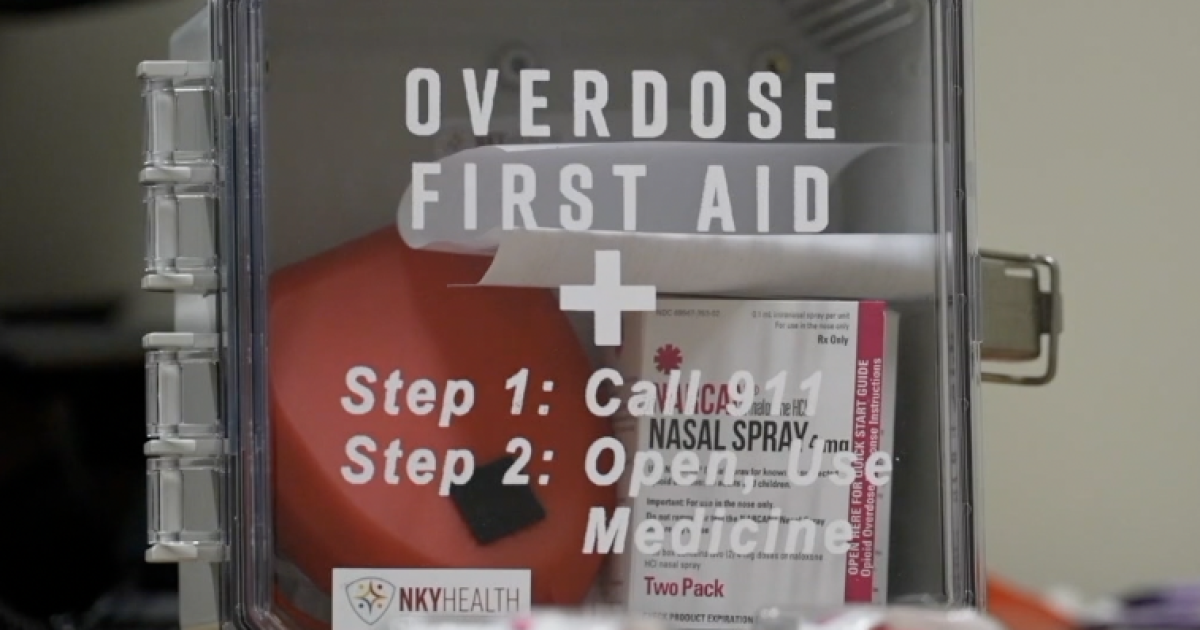
- Get naloxone — today — No prescription needed in Ohio. Pick it up free at Hamilton County Public Health, or purchase it at any CVS or Walgreens. Keep one at home, one in your car.
- Learn the overdose signs — Slow or stopped breathing, blue lips or fingertips, gurgling sounds, unresponsive to voice or touch. If you see these signs, call 911 immediately and administer naloxone.
- Ask for fentanyl test strips — Free at Hamilton County harm reduction sites and the 513 Relief Bus. They detect fentanyl in a drug supply before use — a critical tool during spikes like this.
- Check in with people you know — If someone you love is in recovery or active use, reach out. The fear and stress of a spike like this is real. You don't need the right words — just show up.
- Know the 24/7 number — The Center for Addiction Treatment crisis line is available around the clock: (513) 381-6672. Save it in your phone before someone needs it.
Hamilton County's Harm Reduction Reach
Get Help Now — Hamilton County Resources
- Center for Addiction Treatment — 24/7 Hotline: Around-the-clock crisis support and treatment referrals for Hamilton County residents.
- 513 Relief Bus: Mobile harm reduction unit currently deployed in Lincoln Heights with Talbert House. Offers naloxone, fentanyl test strips, recovery services, and health screenings.
- Hamilton County Addiction Response Coalition: The coordinating body for the county's overdose response. Connects individuals to treatment, recovery, and harm reduction resources.
- Hamilton County Public Health Department: Free naloxone, fentanyl test strips, and addiction support services available countywide — no insurance required.
- Ohio Crisis Text Line: Text HOME to 741741 for free, confidential crisis support 24/7.
What Are 'Orphan Opioids' — and Why Are They Dangerous?
Investigators are looking at a class of drugs sometimes called 'orphan opioids' — synthetic opioid compounds that aren't traditional street fentanyl but share similar or stronger effects. These include substances like nitazenes (e.g., metonitazene, isotonitazene), which have appeared in drug supplies across Ohio and can be far more potent than standard fentanyl.
Orphan opioids are dangerous precisely because they're unfamiliar — users don't know they're present, first responders may not recognize them, and standard naloxone doses may require multiple administrations to reverse an overdose.
Mixed drug cocktails — combinations of opioids with stimulants like methamphetamine or benzodiazepines — further complicate overdose response because the physical presentations can be harder to identify and treat.
The Hamilton County Coroner's Office is working to identify the specific substances involved in the current spike. Results will help coalition members target their outreach and harm reduction messaging more precisely.
Sources & References
- Primary source: local-news — Taylor Woods
- Hamilton County Addiction Response Coalition — Overdose death counts, 66% reduction since 2017 peak, and current spike alert — May 2025
- Ohio Department of Health — Naloxone availability without prescription and fentanyl test strip legality in Ohio
- SAMHSA (Substance Abuse and Mental Health Services Administration) — Opioid overdose recognition signs, naloxone administration guidance, and harm reduction best practices
- Centers for Disease Control and Prevention (CDC) — Synthetic opioid (fentanyl and novel opioid) trends, overdose response protocols, and fentanyl test strip efficacy