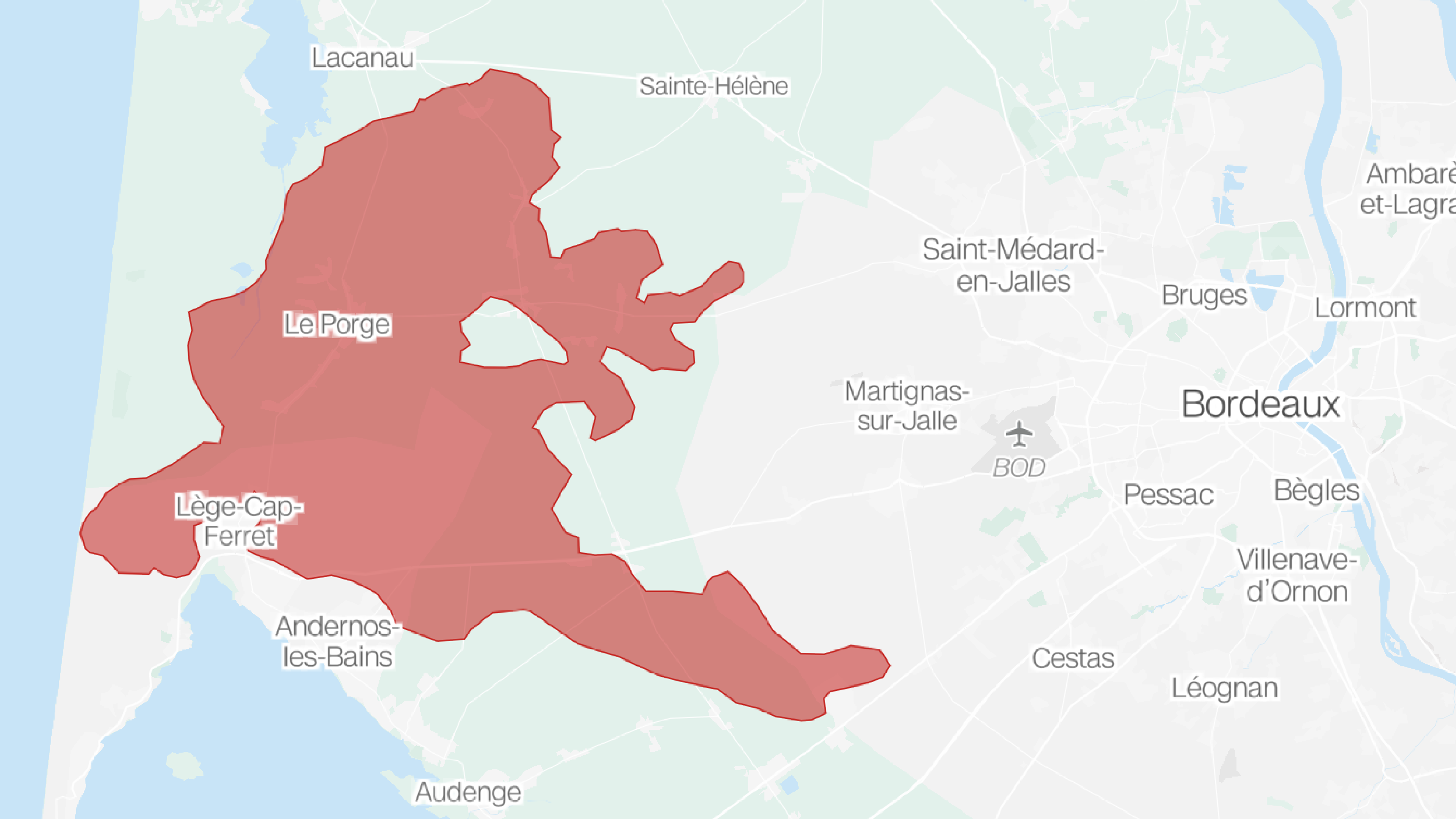
The fires ripping through southern Europe this summer aren't just a foreign-news footnote. They are a preview. The same combination of triple-digit heat, bone-dry air, and high winds that turned France's Gironde region into an inferno is showing up in American fire forecasts every season. Understanding what went wrong in Europe — and how fast — is the first step toward knowing how ready your own community really is.
Near Bordeaux, French officials stocked a massive warehouse with beds, blankets, water, and emergency supplies as a precaution while the fire burned to the city's west and southwest. Bordeaux itself had not been ordered to evacuate, but authorities remained on high alert. Across the continent, the story was the same: communities scrambling to stay ahead of a fire season nobody was fully prepared for.
How Europe's Wildfire Crisis Unfolded
- Summer 2022 — France declares worst disaster since WWII
- This season — Largest blaze erupts near Bordeaux — four times the size of Paris
- Ongoing — 220,000 people evacuated from French coastal communities and tourist areas
- Wednesday — Two Greek firefighters die battling blaze in Rethymno, Crete — in the line of duty
- Recent days — Spain lifts evacuation orders for 20,000 in Madrid region as firefighters gain ground
- This year — At least 13 people die in Spain from wildfires — one of the deadliest seasons in decades
- Overnight — France reports situation largely under control, but triple-digit heat and strong dry winds persist
Europe's Wildfire Crisis by Country
| France | Spain | Greece | |
|---|---|---|---|
| Scale of largest blaze | 4x the size of Paris | Central region fires | Rethymno, Crete |
| People evacuated | 220,000 | Tens of thousands | Not reported |
| Deaths reported | 0 wildfire-related | 13 this year | 2 firefighters |
| Current status | High alert, winds persist | 20,000 allowed to return | Firefighters killed on duty |
| Key affected area | Bordeaux / Gironde | Madrid region | Crete / Rethymno |
The question Europe is asking right now — 'were we ready?' — is exactly the question American households in wildfire-prone states should be asking before the next Red Flag Warning. France had no wildfire-related deaths despite the enormous scale of the blaze, in part because evacuations moved quickly. Spain's death toll of at least 13 suggests that speed of response makes a life-or-death difference.
How ready is your household? The quiz below isn't a lecture — it's a fast check-in on the practical things that save lives when a fire moves faster than a car on a packed evacuation highway.
Is Your Household Ready for a Wildfire?
Five questions. Two minutes. Find out where you stand.
Does your household have a designated evacuation route — one your whole family knows by heart?
- Yes, we've practiced it — Strong. France's rapid evacuation of 220,000 people worked in part because local authorities had pre-designated routes and staging areas. A practiced plan at the household level is the same logic at smaller scale.
- We have one but haven't practiced — Having the plan is a start. But Spain's fires this season killed at least 13 people — and fire officials repeatedly note that hesitation during evacuation is a major factor in fire deaths. Walk your route once this week.
- No, we haven't made one — This is the most urgent gap. When France ordered 220,000 people out, those without a pre-planned route were most at risk of delays. Map your two fastest exits from your neighborhood today — before you need them.
Do you have a 'go bag' — a pre-packed emergency kit you could grab and leave with in under two minutes?
- Yes, packed and ready — You're ahead of most households. France stocked an emergency warehouse in Bordeaux with beds, blankets, and water for the scale of evacuation they faced. Your go bag is your personal version of that warehouse.
- Partially — some things are together — Partial is better than nothing, but 'two minutes to leave' is a real fire scenario. When winds shift, the window to escape can close faster than expected. Finish packing this week.
- No go bag — When France's 220,000 evacuees fled, many had only minutes to decide what to take. A go bag removes that decision entirely. Pack it now: medications, documents, phone charger, three days of water and food.
Are you signed up to receive emergency evacuation alerts for your county or city?
- Yes, phone and email — Multiple alert channels matter. France's rapid evacuation of coastal communities relied on coordinated alert systems reaching residents through multiple channels simultaneously.
- I rely on phone emergency alerts only — Wireless emergency alerts are good, but local county alert systems often carry earlier, more specific warnings — including pre-evacuation notices before mandatory orders are issued. Add a county signup if you haven't.
- No, I don't have alerts set up — In Spain, evacuation orders were lifted for 20,000 Madrid-region residents only after officials confirmed the situation improved — the same system that tells people to leave is the one that tells them it's safe to return. Without alerts, you're flying blind in both directions.
Have you cleared dry brush, dead leaves, or flammable materials from at least 30 feet around your home?
- Yes, regularly maintained — Defensible space is one of the most effective structural protections. France saw homes and other structures destroyed or damaged near Bordeaux — many in areas where vegetation management was not a priority.
- Partially cleared — Partial clearance helps but isn't the full picture. Triple-digit temperatures and strong dry winds — the exact conditions gripping Europe right now — can carry embers far beyond a partially cleared zone.
- No, I haven't done this — In the Bordeaux-area fires, the combination of extreme heat and strong dry winds helped spread fires rapidly. Reducing the fuel immediately around your structure is one of the most direct ways to improve its survival odds.
Do you know which of your neighbors — elderly, disabled, or without a car — might need help evacuating?
- Yes, we have a neighborhood plan — Community coordination saves lives. In both France and Spain, evacuation success depended on organized, community-level coordination — not just individual action. Knowing your neighbors is the hyper-local version of what emergency managers do at scale.
- I know some neighbors who might need help — Good awareness. The next step is a simple conversation: 'If we ever get an evacuation order, do you need a ride?' That 30-second exchange could be the most important one you have this summer.
- I don't know my neighbors well enough — Greece lost two firefighters in Crete who were attempting to protect lives and property in the line of duty. Community safety starts before the emergency professionals arrive. Introduce yourself this week.
What's True — and What Gets the Wildfire Story Wrong
France's Bordeaux-area fire is the worst wildfire disaster in the country since World War II.
Verdict: true
French officials have explicitly characterized it this way. The blaze near Bordeaux has already burned an area roughly four times the size of Paris, with 220,000 people forced to evacuate.
The France fires killed dozens of people.
Verdict: false
Despite the enormous scale of the blaze, French authorities reported no wildfire-related deaths — in part because of early, large-scale evacuations of coastal communities and tourist areas.
Spain's wildfire season this year is among the deadliest in decades.
Verdict: true
At least 13 people died in Spain from wildfires this year, making it one of the deadliest fire seasons the country has seen in decades, according to authorities.
The situation in France was fully extinguished by the time of this report.
Verdict: mostly false
Authorities said the situation was 'largely under control' overnight, but triple-digit temperatures and strong dry winds continued to pose a spread risk. Bordeaux remained on high alert.
Europe's fires carry a direct message for American households: the gap between 'largely under control' and catastrophe is measured in wind speed and preparation time. France avoided mass casualties despite a historic blaze because hundreds of thousands of people moved — fast. Spain's 13 deaths this season happened in the spaces where that speed broke down.
Two Greek firefighters gave their lives in Crete attempting to protect people and property. Their deaths are a reminder that professional fire response has hard limits. The decisions that determine whether communities survive a wildfire — evacuation plans, go bags, defensible space, neighborhood coordination — are made long before any fire truck rolls.
Five Steps to Take Before the Next Red Flag Warning
- Map two evacuation routes from your neighborhood — France's 220,000-person evacuation worked because routes were pre-planned. Know your primary and backup paths — and drive them at least once so you know where they slow down.
- Pack a go bag tonight — Medications, identification documents, phone charger, three days of water and non-perishable food. Keep it by the door. The Bordeaux warehouse stocked with emergency supplies was the community-scale version of this.
- Sign up for your county's emergency alert system — Wireless emergency alerts reach you, but local county systems carry earlier pre-evacuation warnings. Spain's 20,000 Madrid-region residents learned evacuation orders were lifted through official alert channels — not social media.
- Create 30 feet of defensible space — Clear dry brush, dead leaves, and flammable yard materials from around your home. Strong dry winds — the same conditions gripping Europe right now — carry embers farther than most homeowners expect.
- Check on a neighbor this week — Know which neighbors are elderly, disabled, or without transportation. Community coordination is what scaled France's evacuation to 220,000 people. It starts with one conversation on your block.