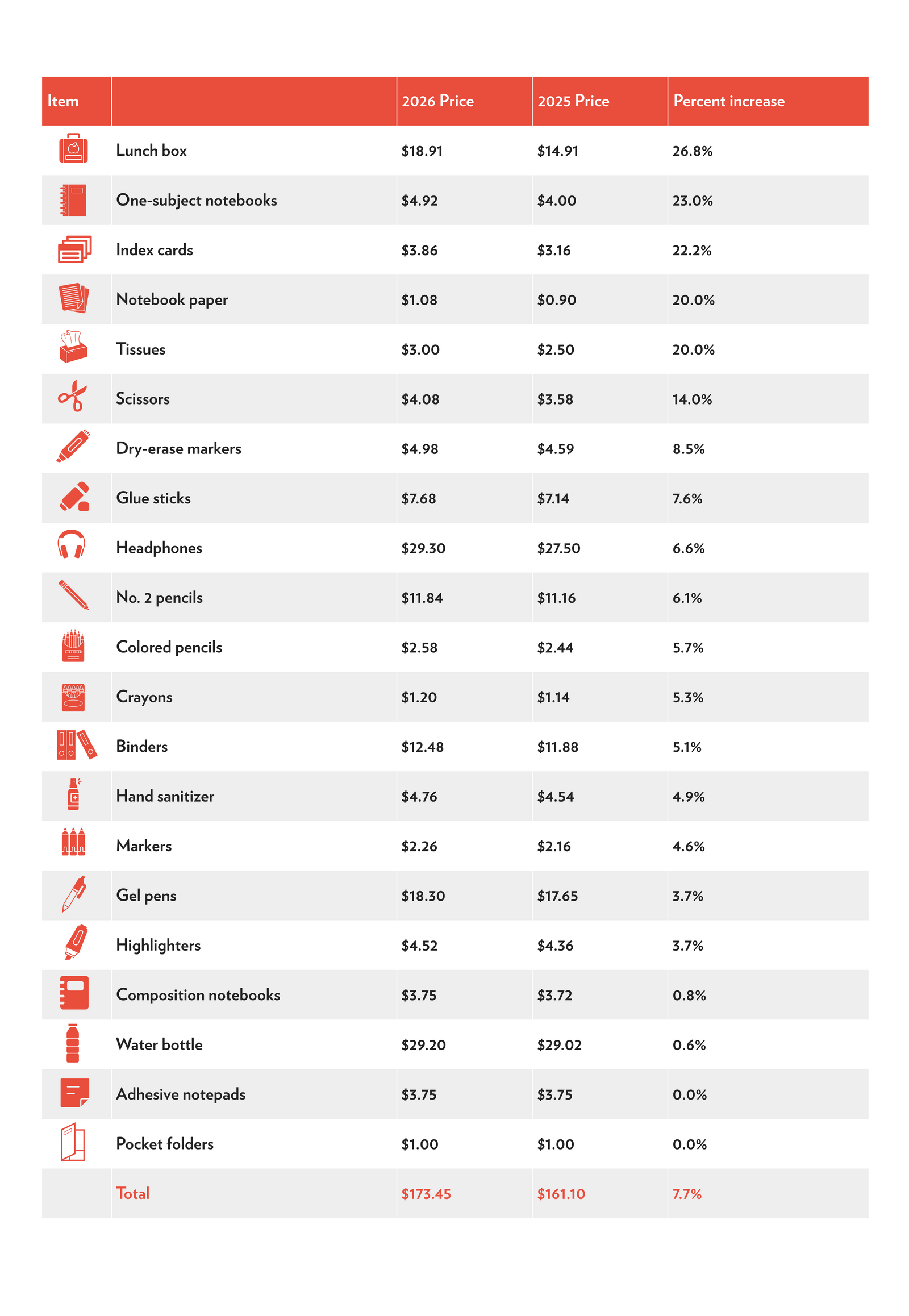
Those numbers aren't abstract for Denver families. What the analysis captures is the compounding squeeze: you're paying more for the bread in the lunchbox, more for the notebook in the backpack, and more at checkout no matter which aisle you're in.
The two organizations behind the analysis — Groundwork Collaborative and The Century Foundation — drew their data from NielsenIQ, a global retail intelligence firm, and cross-referenced actual school supply lists that schools send home to parents. This wasn't a hypothetical list. It reflects what Denver-area parents are actually being asked to buy.
Two forces are doing the most damage to family budgets right now, according to the analysts. First: tariffs. President Trump's import duties — some of which were struck down by the Supreme Court but others pursued through alternative legal authorities — are now fully baked into this year's supply chain. Retailers that had stocked last year's back-to-school inventory before the tariffs hit could absorb some of the shock. That buffer is gone. Everything ordered for 2026 came in at the higher tariff rate, and those costs are being passed directly to shoppers.
Second: energy prices. The closure of the Strait of Hormuz shipping route since the Iran conflict began in late February has sent oil and gas prices higher, and energy costs filter through nearly everything — the plastic shell of a highlighter, the packaging on a composition notebook, the diesel that moved every box from factory to store shelf to Denver Target.
How This Year's Prices Stack Up
| Item | 2025 Price | 2026 Price | Change | |
|---|---|---|---|---|
| Sandwich Bread (loaf) | ~$3.58 | $4.36 | +21.8% | |
| Box of Raisins | ~$3.60 | $3.77 | +4.7% | |
| Lunch Staples (avg) | Baseline | Up 11% | +11% | |
| Full Supply List | Baseline | Up ~8% | +8% | |
| Overall Inflation Rate | — | ~4% | +~4% |
The timing is brutal. Congressional changes approved last year have tightened eligibility for the Supplemental Nutrition Assistance Program and added new work requirements. A nonpartisan budget analysis group estimates 1.5 million children have lost SNAP benefits since July 2025. That means families simultaneously have less food assistance AND face higher grocery prices — a combination analysts described as a 'double whammy.'
And Denver families aren't alone in reaching for a credit card. Data cited in the analysis shows increasing numbers of American households taking on debt to cover basic expenses like groceries and utilities. School supplies landing in August — right as summer income gaps peak for hourly workers — can push an already-stretched budget into the red.
Where the $4,000 Annual School Budget Goes
What's Driving These Prices — And What Isn't
Tariffs are already factored into this year's back-to-school prices.
Verdict: true
Unlike last year, when many retailers had purchased inventory before tariffs hit, this year's supplies were all ordered after the import duties took effect. Those higher costs are being passed directly to consumers, according to Groundwork Collaborative's analysis.
The Supreme Court ended Trump's tariffs, so prices should be coming down.
Verdict: mostly false
The Court struck down the sweeping April 2025 tariffs, but the administration has continued pursuing import duties through other legal authorities — including a new round of 10–12.5% levies on imports from 60 countries announced recently.
School supply prices are rising at the same rate as general inflation.
Verdict: false
The supply list increase of nearly 8% is more than double the overall rate of inflation, according to the Groundwork Collaborative and The Century Foundation analysis. Some individual items, like sandwich bread (up 21.8%), far exceed that.
The Iran conflict is affecting what Denver families pay at Target.
Verdict: true
The closure of the Strait of Hormuz shipping route has sent oil and gas prices higher since the conflict began in late February. Energy costs flow through supply chains, affecting the cost of plastic, packaging, and transportation — all components of school supply manufacturing and delivery.
How to Stretch Your Back-to-School Budget This Year
- Audit before you buy — Go through last year's backpack first. Highlighters, pens, and markers saw only modest price increases — reusing them skips the surge entirely.
- Prioritize the high-spike items — Paper, index cards, and lunchboxes saw far steeper increases than the 8% average. Buy these in bulk early or look for sales, and be willing to go generic.
- Rethink the sandwich bread habit — At $4.36 and up 21.8%, bread is the single sharpest lunch staple spike. Alternatives like wraps or batch-cooked proteins may offer better value this year.
- Know your SNAP eligibility status — Congressional changes since July 2025 tightened eligibility and added work requirements. If your situation has changed, your household's eligibility may have changed too — check before assuming you don't qualify.
- Look for school supply drives — Community supply drives — like the one where a Lafayette, LA father of six found relief — are running in metro areas this season. Check with Denver Public Schools and local nonprofits for drive locations.
Why School Costs Keep Rising Even When Other Prices Stabilize
Back-to-school products are unusually exposed to tariff pressure because so many of them — composition notebooks, plastic binders, lunchboxes, and more — are manufactured overseas and imported. When import duties rise, the entire cost structure of those products shifts.
Energy prices compound the problem in a less obvious way. Even products made domestically still depend on petroleum-based plastics for packaging and manufacturing, and on diesel for transportation. The Strait of Hormuz closure has pressured oil markets since the Iran conflict began in late February, and those costs filter through to the retail shelf whether or not a parent notices them.
The SNAP eligibility changes add a third layer. When families lose food assistance, they absorb more grocery costs out of pocket — which means the 11% increase in lunch staple prices hits a budget that already has less cushion. Analysts describe this as the core tension of the 2026 back-to-school season: prices are up precisely when the safety nets that once helped families absorb them have been reduced.
The 2026 Back-to-School By the Numbers
- 8% — Supply List Price Increase
- 11% — Lunch Staple Increase
- $4,000 — Typical Family Annual Cost
- 1.5M — Kids Lost SNAP Benefits
The $4,000 annual estimate from The Century Foundation captures the full scope of what families are managing — not just August's supply run, but 180 days of packed lunches and restocked pencil cases. For Denver households where wages haven't kept pace with these specific price surges, that number isn't a line item. It's a monthly negotiation.
The lesson from the analysts who compiled this data is straightforward: the forces driving these prices — tariffs now fully embedded in the supply chain, energy costs elevated by geopolitical conflict, and reduced food assistance for low-income families — aren't resolving before the school bell rings. Denver parents heading into August 2026 are managing a cost environment that is meaningfully different from the one they navigated just twelve months ago.
Back-to-School Budget Resources
- Community Supply Drives: Local nonprofits and school districts often run free supply drives before the school year. Check with Denver Public Schools and community organizations for 2026 drive dates and locations.
- SNAP Eligibility Has Changed: Congressional changes since July 2025 altered who qualifies for food assistance and added work requirements. Families whose circumstances have changed should re-check their eligibility status.
- Watch for the Highest-Surge Items: Sandwich bread (up 21.8%), index cards, paper, and lunchboxes have seen far steeper price increases than average. Budgeting extra for these specific categories will give you a more accurate shopping plan.
Sources & References
- Primary source: Scripps News — Jacob Gardenswartz
- Groundwork Collaborative and The Century Foundation — Analysis of NielsenIQ retail data on school supply and lunch staple price changes, 2025–2026
- Center on Budget and Policy Priorities — Projected drop in children receiving SNAP benefits since July 2025 eligibility changes
- U.S. Bureau of Labor Statistics — Consumer Price Index, All Urban Consumers, June 2026