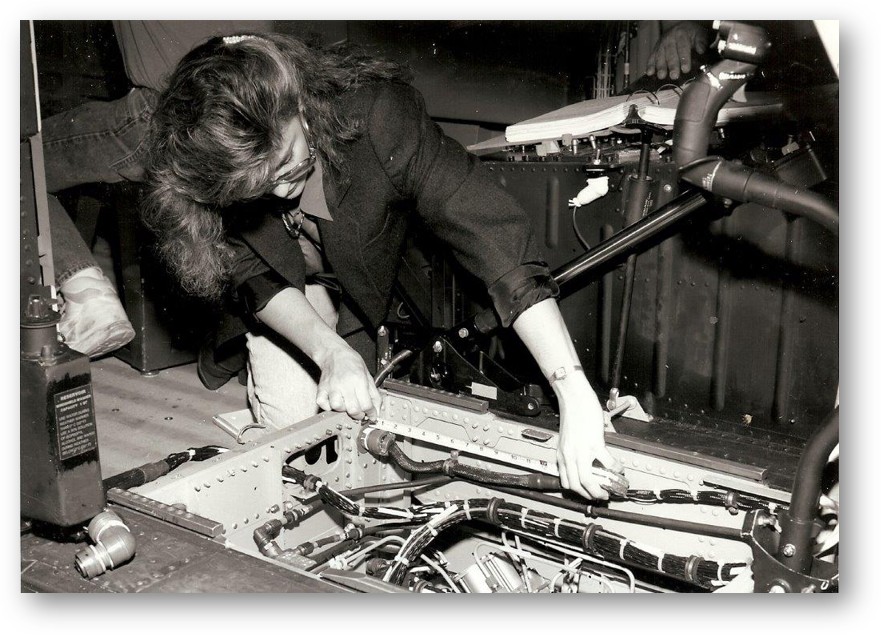
Most people driving past Centennial Airport have no idea what's happening inside one of its hangars. United Rotorcraft's team strips down military-grade Black Hawk helicopters — the same aircraft used on combat missions — and rebuilds them from the inside out for a completely different kind of battle.
The concept dates back to the early 1990s, when Los Angeles County told Black Hawk manufacturer Sikorsky that its aging Huey helicopters simply couldn't keep pace with the growing size and speed of California wildfires. The answer wasn't a new aircraft — it was a radical transformation of one that already existed.
How Well Do You Know the Firehawk?
Five questions. The answers might surprise you.
What prompted the original development of the Firehawk conversion in the early 1990s?
- The U.S. Forest Service issued a federal contract for a new aircraft — No federal contract started it. The push came from a county government — Los Angeles County — telling Sikorsky its existing Huey helicopters couldn't keep up with the pace of wildfires and demanding something bigger and more capable.
- Los Angeles County told Sikorsky its Hueys couldn't keep up with wildfires — Correct. LA County approached Sikorsky directly and said their Hueys were outmatched. That conversation launched what would become a 30-plus year legacy based right here in Arapahoe County.
- The military ordered a civilian version of the Black Hawk for state agencies — The military didn't initiate this — a local government did. The conversion process was developed over several years working with fire experts to understand the specific demands of firefighting missions.
- A series of Colorado wildfires created demand for a larger aircraft — The origin story is actually California, not Colorado. Colorado didn't purchase its first two Firehawks until 2022 — nearly three decades after the concept was pioneered.
How many jobs does each United Rotorcraft aircraft unit create?
- 10 to 20 jobs — The actual number is significantly higher. Each unit supports 50 to 60 jobs — a workforce large enough to feel the impact across Arapahoe County's economy.
- 50 to 60 jobs — Right. Each aircraft unit creates 50 to 60 jobs at United Rotorcraft, with the company producing around 10 to 12 aircraft per year — a substantial contribution to the Centennial Airport economy.
- 100 to 120 jobs — Not quite. Each unit creates 50 to 60 jobs. With 10 to 12 aircraft produced per year, that multiplies into a major driver of Arapahoe County's aviation workforce.
- About 30 jobs — The real number is nearly double that — 50 to 60 jobs per unit. At that scale, United Rotorcraft's output is a meaningful piece of the region's aerospace economy.
Why is Colombia receiving its first Firehawks from United Rotorcraft?
- A NATO agreement requires member nations to share firefighting aircraft — Colombia's order isn't tied to a treaty — it's driven by a genuine wildfire crisis. More than 7,300 wildfires were recorded in Colombia in 2024, burning around 716,000 acres. That scale of destruction created the demand.
- Colombia recorded more than 7,300 wildfires in 2024, burning 716,000 acres — Exactly. Colombia's 2024 wildfire season was severe — over 7,300 fires and 716,000 acres burned. United Rotorcraft is now building the first of two Firehawks for the Colombian air force, marking the company's international expansion.
- The U.S. State Department funded the sale as foreign aid — No foreign aid program was cited. Colombia's purchase is driven by the country's own wildfire emergency — more than 7,300 fires in 2024 alone — and United Rotorcraft's growing international reputation.
- Colombia is replacing aircraft lost in military operations — The Colombian order is about wildfires, not military replacement. With 716,000 acres burned in 2024, Colombia's air force needs dedicated aerial firefighting capability — and turned to the Centennial Airport team to build it.
How does United Rotorcraft determine what goes into each Firehawk it builds?
- A standard federal specification applies to all firefighting aircraft — There is no one-size-fits-all template. Each aircraft is custom-built — the team evaluates the agency's mission, operating altitude, whether it needs swift water rescue or high-mountain search and rescue capability, and then designs accordingly.
- Each aircraft is custom-built to the county or state agency's specific mission — Correct. United Rotorcraft evaluates operating altitude, mission type, and specific rescue requirements for every client. The result is an aircraft tailored to that agency — not a production-line clone.
- Sikorsky provides a fixed firefighting package that United Rotorcraft installs — The customization happens at United Rotorcraft, not at Sikorsky. The team works with each county or state agency to understand their specific needs before a single piece of equipment is ordered.
- The FAA sets the configuration requirements for all wildfire aircraft — FAA oversight applies to airworthiness, but the mission configuration is driven by the customer. Every Firehawk is built around what a specific agency needs to do — from the altitude it flies to the rescue missions it supports.
What share of Centennial Airport's $2.4 billion in total revenue comes from on-airport activity like United Rotorcraft?
- About 40 percent — The actual share is much higher. On-airport activities account for 87 percent of Centennial Airport's $2.4 billion in total revenue, according to CDOT — making facilities like United Rotorcraft the economic backbone of the airport.
- 87 percent — Right. On-airport operations generate 87 percent of Centennial Airport's $2.4 billion total revenue figure, per the latest CDOT numbers. Companies like United Rotorcraft are not a niche operation — they are the airport's economic engine.
- Just over half — around 55 percent — It's actually far higher than half. CDOT data shows on-airport activities generate 87 percent of the airport's $2.4 billion total revenue — a majority so large that what happens inside those hangars essentially defines Centennial Airport's economic identity.
- Around 70 percent — Close in spirit but the actual number is higher still — 87 percent. That figure, from CDOT, underscores why companies like United Rotorcraft are considered critical to Arapahoe County's aviation economy.
Inside United Rotorcraft's hangar, avionics lead Philip Fleming and his colleagues turn raw airframes into mission-ready machines. For many people who hear what Fleming does for a living, the reaction is disbelief — they didn't know this level of aerospace work was happening at a suburban Denver airport.
The company produces around 10 to 12 aircraft per year, a pace that keeps the facility humming and contributes to a regional aerospace and aviation industry that has added over 1,600 jobs in the past five years, outpacing U.S. growth by about 3 percent, according to Denver South.
Colorado bought its first two Firehawks in 2022. California has received 32, with three more in production. Now the aircraft built in Arapahoe County is crossing borders — United Rotorcraft gave Denver7 a first look at the first of two Firehawks being assembled for the Colombian air force, a country that recorded more than 7,300 wildfires in 2024, burning around 716,000 acres.
For Jeanette Eaton, who helped engineer the original conversion process more than three decades ago and now serves as United Rotorcraft's vice president of strategy and business development, watching the Firehawk go international is the culmination of a career's worth of work — all of it rooted in a belief that aerial firefighting is not just aviation, it's a lifesaving mission.
Firehawk Footprint: Colorado vs. California vs. Colombia
| Colorado | California | Colombia | |
|---|---|---|---|
| Firehawks Delivered | 2 | 32 | 0 (in production) |
| First Delivery Year | 2022 | 1990s | In progress |
| Wildfire Context | Active fire season state | Largest state buyer | 7,300+ fires in 2024 |
| Units Pending | — | 3 more ordered | 2 being built |
The stakes never feel abstract to the people inside that hangar. For Fleming, every extra hour spent on wiring or avionics is an investment in someone's safety — possibly his own. That perspective — that the aircraft he helps build could one day protect his own neighborhood — is what keeps the work meaningful long after the novelty wears off.
What United Rotorcraft has built at Centennial Airport is more than a conversion facility. It is a 30-year proof of concept that Colorado's aerospace industry can solve problems that governments and fire agencies around the world cannot solve on their own.
Colorado's Wildfire Air Fleet
- United Rotorcraft — Centennial Airport: Located in Arapahoe County, the facility builds both aerial firefighting aircraft and Flight for Life medical helicopters, producing 10 to 12 units per year.
- Colorado's Firehawks: The state purchased its first two Firehawks in 2022. Each aircraft is custom-built to match the specific altitude, mission, and rescue requirements of the operating agency.
- Going International: United Rotorcraft is currently assembling the first of two Firehawks for the Colombian air force — the company's first international firefighting contract — as wildfires intensify globally.
Sources & References
- Primary source: Denver7 — Adria Iraheta
- Colorado Department of Transportation (CDOT) — Centennial Airport on-airport revenue share of $2.4 billion total
- Denver South — Regional aerospace and aviation industry added over 1,600 jobs in the past five years, outpacing U.S. growth by about 3 percent
- U.S. Bureau of Labor Statistics — Colorado Unemployment Rate: 3.9% (June 2026, Seasonally adjusted)