Is Your Household Ready When the Grid Goes Down?
Five questions. Takes under two minutes. Residents at Mapleton Mobile Home Park answered these the hard way — let's see where you stand.
If the power went out tonight and stayed out for three days, do you have a way to keep medications that require refrigeration safe?
- Yes — I have a backup power source or plan — Good. Medication refrigeration is one of the most urgent gaps for vulnerable households. Mapleton residents now each have a 1,000-watt generator and a dedicated medication fridge because of this exact need.
- Partially — I'd figure something out — Figuring it out in the moment is risky. The Boulder County Climate Equity Fund grant gave every one of Mapleton's 136 households a small solar panel and a fridge specifically so residents wouldn't have to improvise during a crisis.
- No — I haven't thought about this — This is the gap Isabel Sanchez has spent five years addressing in communities like Mapleton. Mobile and modular homes are especially vulnerable because they aren't built to withstand extreme cold or environmental conditions — a three-day outage can become a medical emergency fast.
Do you know which of your immediate neighbors has medical needs, mobility challenges, or would need help evacuating in an emergency?
- Yes — I know my neighbors well and we've talked about it — This is exactly what community-led preparedness looks like. Isabel Sanchez, who trains Mapleton residents, says it plainly: 'You can't go through a disaster alone. You have to have community.'
- Sort of — I know a few neighbors casually — Casual familiarity is a starting point, but disaster preparedness requires knowing specifics — who needs medication, who can't drive, who has young children. Sanchez's training at Mapleton focuses on mapping exactly this kind of neighborhood knowledge before a crisis hits.
- No — I don't really know my neighbors — Sanchez focuses her training on communities where residents 'can't turn around and come right back' after a disaster — seniors, mobile home park residents, people with medical needs. Isolation is one of the biggest risk multipliers in any emergency.
If your home became unsafe — from extreme cold, flooding, or structural damage — do you have a specific place to go that isn't a hotel?
- Yes — I have family, friends, or a community space identified — A designated shelter is the foundation of any disaster plan. Mapleton's project takes this a step further — they're converting the park's laundry room into a fully solar-powered community shelter capable of running three days off-grid.
- Maybe — I'd call around and figure it out — Calling around during an active emergency — when cell networks are strained and roads may be blocked — is unreliable. Mapleton's community shelter exists precisely so residents have a guaranteed option within walking distance, no phone call required.
- No — I don't have a plan — Dan Teboe, a Mapleton resident, put it directly: mobile and modular homes aren't built to withstand extreme cold or harsh environmental conditions. Without a backup shelter plan, residents of manufactured housing face serious risk during extended outages or weather emergencies.
Does your household have any backup power — even a small generator, solar panel, or battery bank?
- Yes — generator, solar, or battery backup — You're ahead of most households. Mapleton's program equipped all 136 homes with a small solar panel and a 1,000-watt generator — treating backup power not as a luxury but as baseline safety equipment.
- Just a few battery packs or a power bank — Battery packs can cover phones and lights, but won't run a medication fridge or a fan during a heat emergency. The Mapleton model pairs a small solar panel with a 1,000-watt generator for exactly this reason — one covers the other's gaps.
- Nothing — standard grid power only — Grid-only households are fully exposed the moment power fails. The Boulder County Climate Equity Fund's grant to Mapleton was designed specifically to close this gap for households that couldn't otherwise afford backup equipment.
Has anyone ever asked YOUR household what you actually need in a disaster — or were you handed a one-size-fits-all plan?
- Yes — I've been part of conversations about local needs — That's the model Boulder County is trying to scale. The Climate Equity Fund puts resources directly into grassroots organizations so communities shape their own solutions — not the other way around.
- Sort of — I've seen flyers or attended a meeting — There's a difference between being informed and being heard. Isabel Sanchez founded her training program because, as she put it, 'communities are tired of everyone coming up with a solution for something that's going on, but completely not what the community needs.'
- No — nothing has ever been tailored to where I live — This is the norm for many vulnerable communities. Mapleton's project flips that model: the shelter design, the equipment choices, even the training curriculum all came from residents themselves — funded by the Boulder County Climate Equity Fund in its second year of operation.
That quiz surfaces the same gaps Isabel Sanchez has been mapping, door by door, for five years at Mapleton Mobile Home Park. Her focus isn't on the most prepared — it's on the households that disasters hit hardest and leave behind longest: seniors, people with medical needs, residents of manufactured housing that wasn't designed for Colorado winters.
The Boulder County Climate Equity Fund, now in its second year, is the mechanism turning that neighborhood knowledge into physical infrastructure. Rather than sending a government agency to design a solution, the fund puts grant money directly into the hands of people like Sanchez — and trusts them to build what their community actually needs.
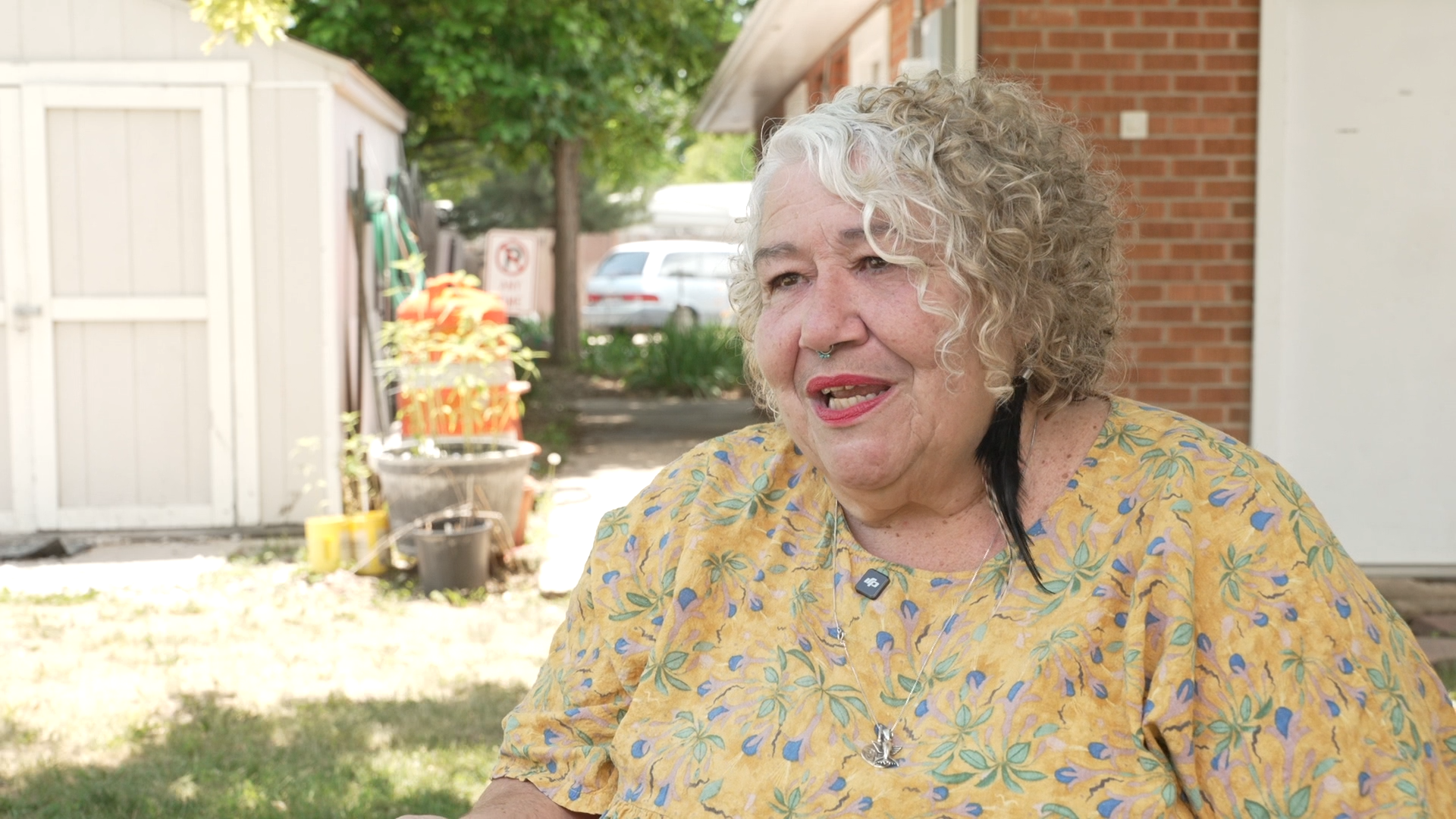
You can't go through a disaster alone. You have to have community.Isabel Sanchez, Community disaster preparedness trainer
How Mapleton Built a Community Safety Net
- Year 1 — Individual household kits distributed
- Ongoing — Isabel Sanchez conducts community disaster training, funded by a city of Boulder grant
- Year 2 — Boulder County Climate Equity Fund grant awarded to upgrade community infrastructure
- In Progress — Laundry room redesigned as fully electrified, solar-powered emergency shelter — engineered for 3 days off-grid
The shelter project is both practical and symbolic. A laundry room is a space every resident already knows and uses. Transforming it into a solar-powered refuge that can run three full days without grid power makes the community's resilience visible — something neighbors can point to and trust before a disaster ever arrives.
Dan Teboe, who lives at the park, named what most residents feel: manufactured homes simply weren't designed for Colorado's conditions. That reality doesn't go away, but a community shelter — built to the community's own specifications — changes the math on what's survivable.
Top-Down vs. Community-Led Disaster Preparedness
| Traditional Approach | Mapleton Model | |
|---|---|---|
| Who designs the solution | Government agency or outside org | Residents and community trainers |
| Where funding goes | Centralized programs | Directly to grassroots organizations |
| Shelter access | Drive to a designated site | On-site, solar-powered, 3 days off-grid |
| Household equipment | Not typically provided | Solar panel, 1,000W generator, med fridge, fan — 136 homes |
| Training model | Outside experts, one-time sessions | Neighbor training neighbor, ongoing for 5+ years |
The federal government has cut so much of the climate funding and so much of the racial equity funding, so this is really a marriage of both things.Ashley Stolzmann, Boulder County Commissioner
Boulder County Commissioner Ashley Stolzmann framed the fund as a response to a shrinking federal safety net — one that historically supported both climate adaptation and racial equity programs. With those resources reduced, the county's locally-controlled fund becomes more important, not less.
What Mapleton has built isn't just a shelter. It's a template — proof that when communities are trusted to identify their own vulnerabilities and design their own solutions, the results are more durable and more relevant than anything designed from the outside.
Common Assumptions About Disaster Preparedness
Mobile home residents can rely on the same emergency resources as everyone else.
Verdict: mixed
Standard emergency resources exist, but mobile and modular homes face specific vulnerabilities — they aren't built to withstand extreme cold or many environmental conditions, as Mapleton resident Dan Teboe noted. Residents of manufactured housing often can't recover as quickly after a disaster as those in site-built homes.
Top-down disaster plans work for all communities.
Verdict: mostly false
Isabel Sanchez, who has trained neighbors for five years, said communities are tired of solutions designed without their input that miss what they actually need. The Boulder County Climate Equity Fund was designed specifically to put resources in the hands of communities themselves.
Individual household kits are enough for a multi-day emergency.
Verdict: mixed
Mapleton's program gave every household a 1,000-watt generator, solar panel, medication fridge, and fan — a strong baseline. But the community shelter project recognizes individual kits aren't sufficient on their own: a shared, solar-powered space capable of running three days off-grid fills the gaps that single-household equipment cannot.
Build Your Own Household Emergency Baseline
- Secure medication refrigeration — If anyone in your home takes medication that requires refrigeration, identify a backup power source — a battery bank, generator, or small solar panel — before an outage happens. This was the first priority at Mapleton.
- Map your neighbors — Know who on your block has mobility challenges, medical needs, or would need evacuation help. Isabel Sanchez's training is built on this kind of hyper-local knowledge — it only works if neighbors know each other.
- Identify a community anchor — Find the nearest community space — a community room, a church hall, a neighbor with more space — that could serve as a gathering point if homes become unsafe. Mapleton's laundry room is being engineered for exactly this role.
- Plan for three days without power — The Mapleton shelter is designed for 72 hours off-grid. Use that as your household benchmark: food, water, medication, communication, and warmth for three days without any outside support.
- Ask what your community already has — Before buying equipment or building a plan from scratch, find out what local organizations, county programs, or neighborhood groups already offer. The Boulder County Climate Equity Fund exists specifically to resource grassroots preparedness efforts.
About the Boulder County Climate Equity Fund
The Boulder County Climate Equity Fund is in its second year of operation. Its core design principle is to move resources directly to grassroots organizations — letting communities identify and build the solutions that fit their specific circumstances, rather than receiving programs designed elsewhere.
The fund addresses a gap that Boulder County Commissioner Ashley Stolzmann described as a convergence of two shrinking federal funding streams: climate adaptation resources and racial equity programs. By keeping the fund at the county level and routing it through community organizations, it can respond to local vulnerabilities that larger programs often overlook.
Isabel Sanchez's work at Mapleton Mobile Home Park — training neighbors, distributing household emergency kits, and now building a solar-powered community shelter — is one example of how the fund is being deployed in practice.
What Mapleton's Model Means for Your Neighborhood
- Solar-Powered Community Shelter: Mapleton's laundry room is being converted into a fully electrified, solar-powered shelter designed to run 3 days without grid power — built to the community's own specifications using the Boulder County Climate Equity Fund grant.
- Household Emergency Kits: All 136 households at Mapleton now have a small solar panel, a 1,000-watt generator, a medication fridge, and a fan — baseline equipment chosen because residents identified those as their most critical needs.
- Community-Led Training: Isabel Sanchez has trained Mapleton neighbors in community disaster preparedness for more than five years, funded by a city of Boulder grant, with a focus on seniors and others who recover most slowly after disasters.